
A small dining room is the one place where people often make mistakes at Christmas. It is also the easiest to get beautifully right. The common error is forcing a holiday plan into a limited space. Think centerpieces, a tree tucked in the corner, garlands covering every surface, until suddenly there is no room to set down a plate. The solution is not complicated. It is simpler than most guides suggest. You only need one colour story, one low centerpiece, warm lighting and enough space to actually eat. Everything else is optional.
This guide is for small dining rooms, not staged showrooms. Maybe your setup is a table against a wall, a nook in a living area or a space that fits four people on a regular day but six during the holidays. The ideas here work in all of them. They use things you likely own. They cost little or nothing new. They keep your table functional from the first course to the last cup of cocoa.
Begin with the room as it is. Measure the table. Count the chairs you actually use. Watch where people move. A dining room feels festive when it still functions as a dining room. That should be your rule for every idea that follows: if it blocks a face, a plate or a walkway, it does not belong, no matter how beautiful it looked in a photo.
Start With One Colour Story
Small rooms can seem messy if every decoration has its colour. Choose two colours and one accent colour. Use them everywhere. Deep green with cream. A little gold is a timeless choice. Red with cream and natural wood feels warmer and old-fashioned. White with gold and soft green gives a bright feeling in a room that gets lots of sunlight.
Once you have decided on your colours, use them on the runner, the napkins, the candles and the little items on the sideboard. You do not need everything to match. A cream runner you already have, green napkins folded neatly, and gold candle holders borrowed from another room will look like a single plan because the colours are repeated. That repetition is what makes a small room look planned and not messy.
Do not give in to the urge to add a colour just because a decoration was on sale. Put it aside for another room. Save it for next year. In a dining room being careful with colours is not boring. It is what makes the pieces you do use stand out. The same rule works for patterns: one pattern, like plaid or a simple stripe, is enough. Let the rest of the room stay simple so the pattern can have space to shine.
Keep the Centerpiece Low and Narrow
Choosing a centerpiece is the most important decision in a small dining room.
The centerpiece must be low so that guests can see each other across the table. The centerpiece must also be narrow enough for plates, glasses and serving dishes to fit. A simple rule for the centerpiece is: nothing taller than a water glass in the middle and no wider than one third of the table width.
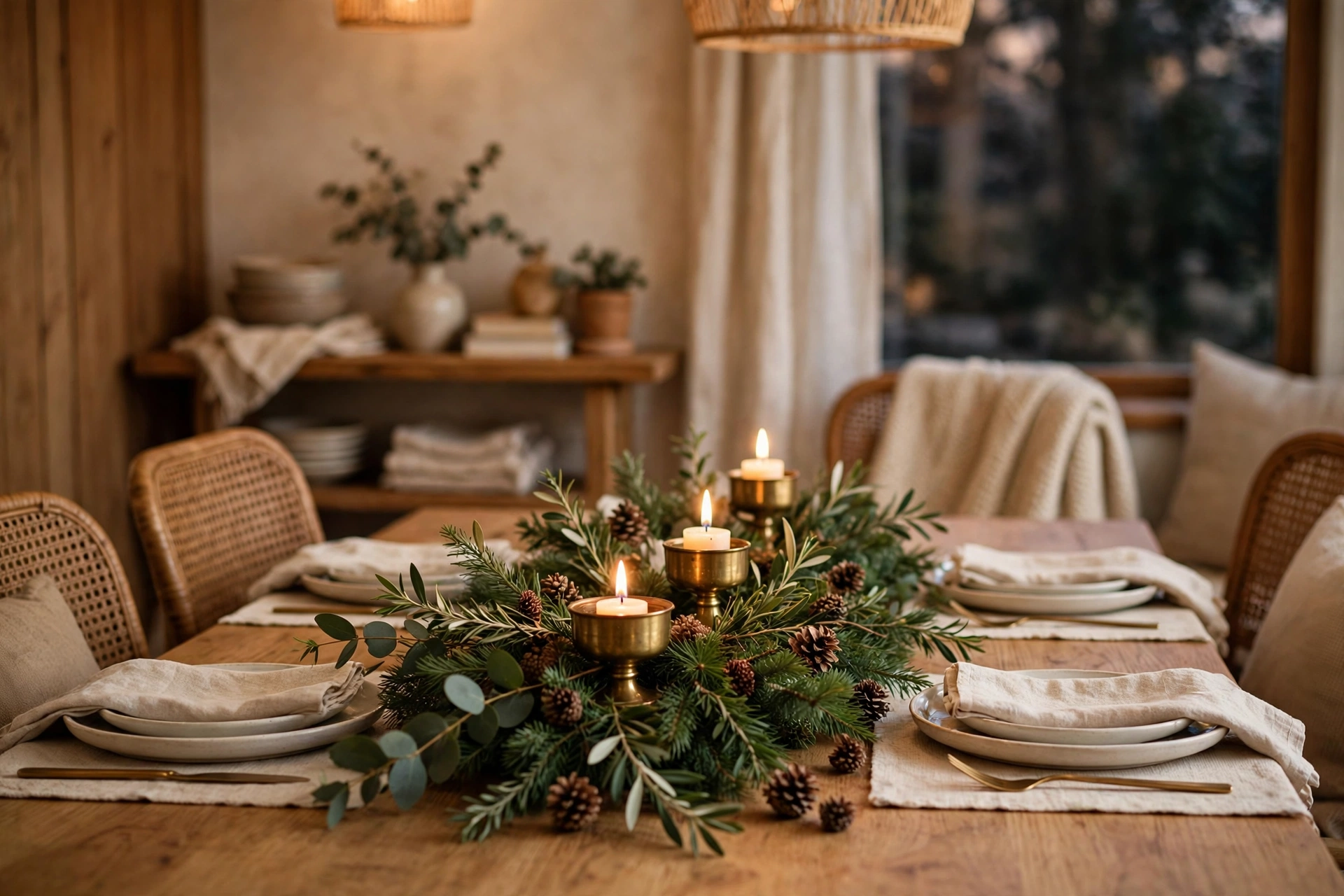
A greenery runner down the center can do this job.
Lay a strip of cedar or pine branches along the table. Add three short candles in holders of different heights. Tuck in a few pinecones. The centerpiece smells wonderful. It costs very little. The centerpiece can stay in place for meals through December, not just on Christmas Day.
If you do not have greenery, a wooden tray works as well.
Set a candle, a tiny tree and two or three ornaments on the tray. The centerpiece lifts away whole when you need the table for serving. That portability matters in a small room because the table has to change jobs several times during a holiday meal. A tray centerpiece respects that reality. A sprawling arrangement does not.
Layer the Table Without Crowding It
Layering sounds fancy. In practice building the table in steps means adding one layer at a time instead of piling things on.
Begin with the runner or a plain tablecloth. Add placemats only if the table is wide enough for them without pushing plates. Then set the plates and then add the small festive touches: a folded napkin with a sprig of greenery, a place card or a single small ornament beside each plate.
Keep one rule for the place settings: every guest needs elbow room and a clear space for a glass and a side plate. If adding a charger plate means the glasses crowd together, skip the charger. If a big napkin fold eats into the plate space, fold it simply instead. Guests remember a meal far longer than they remember a complicated fold.
For the meals of December you do not need the full Christmas setting every night. Keep the runner and the centerpiece in place. Use plain plates and simple napkins. Then for the Christmas meal, swap in the festive napkins and the place cards. That two level system keeps the room feeling festive all month without making every dinner feel like a production.
Dress the Chairs, Not the Table
When the table is small the chairs become your extra decorating surface and they cost no table space at all.
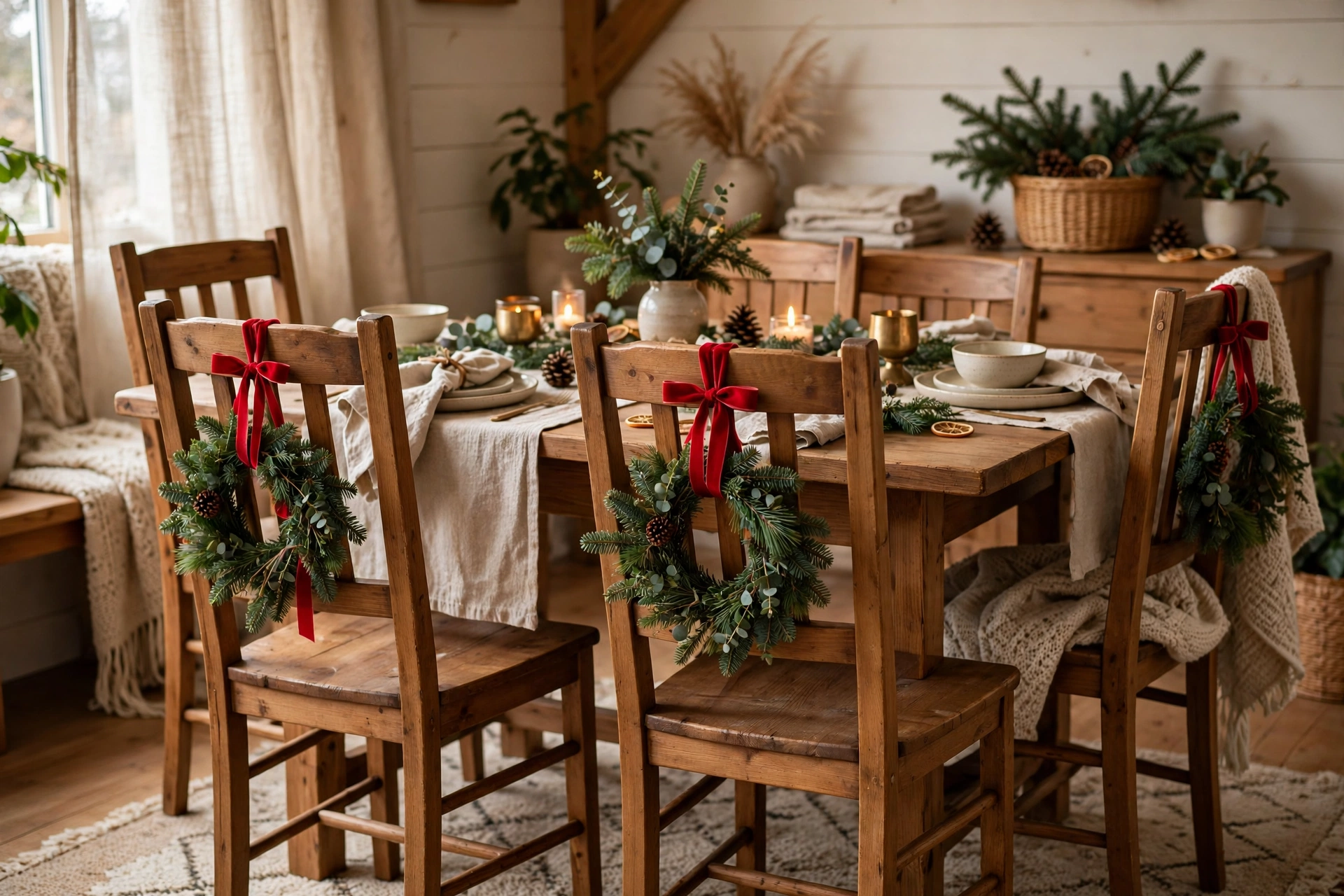
A small wreath tied to the back of each chair with ribbon is the move to try. It works because it adds Christmas at eye level without touching the table. Keep the wreaths small, no wider than the chair back. Use the same ribbon colour as your colour story.
If wreaths feel like much, try a simpler version: a short length of greenery tied with twine or a single ornament hung from a ribbon loop. Even a chair cushion in a colour or a throw draped over the end chairs changes the feel of the room. The point is to spread the Christmas feeling around the room instead of concentrating it all on one crowded table.
Be honest about comfort though. A wreath that pokes guests in the back or a bow that comes undone every time someone sits down is worse than no decoration. Tie everything firmly, test it by sitting down yourself and remove anything that gets in the way. In a small room where guests sit close to the chairs, every detail is noticed, for better or worse.
Use the Walls and the Sideboard
A small dining room usually has one thing people forget: space.
Walls, a sideboard top, a windowsill and the top of a hutch can all carry Christmas without taking an inch from the table. This is where the rest of your decorating belongs.
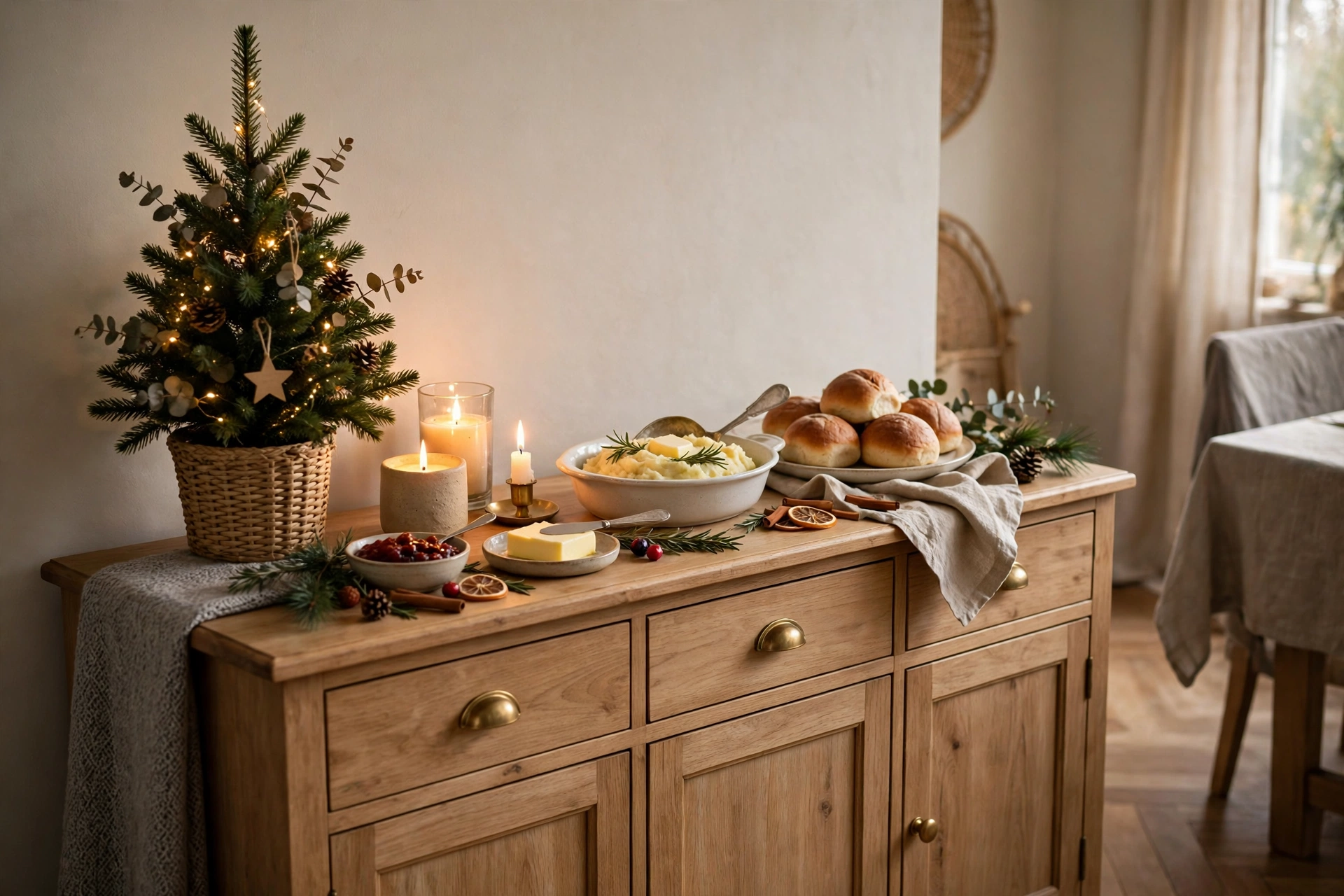
On the wall one simple wreath or a short garland over a mirror or a framed picture is enough. If you have a sideboard, treat it as the display shelf: a tree in a basket, two candles and a small stack of serving dishes ready for the meal. That arrangement looks festive. It is also practical because the serving dishes are exactly where you need them.
The same thinking works for the rest of the house. It is worth borrowing ideas across rooms. If you have already dressed your entryway, you know how much a single wreath and warm light can do in a space and the same small Christmas entryway ideas translate well to a dining wall. Likewise the low centerpiece rule here matches what works in small Christmas living room ideas, where keeping sightlines open matters just as much. And if your dining table sits near the kitchen, the one tray idea from small Christmas kitchen ideas is the same trick moved one room over.
Keep the sideboard display to one layer deep. If you have to move three things to reach the serving plates, the display is too deep. Edit it down until serving is easy. A sideboard that works hard during the meal is better than a sideboard that only photographs well.
Light It Warm, in Layers
Light does more for a dining room at Christmas than any decoration you can buy. Warm light makes a small room feel cozy rather than cramped, while harsh overhead light makes every flaw visible. Aim for three layers of light and keep the overhead light low or off during the meal if you can.
The first layer is candles on the table. Keep them short and safe. Battery candles are a choice if children are around or if the table is very close to the greenery. The second layer is a lamp or a string of fairy lights on the sideboard or along a shelf. The third layer is the room light itself, dimmed if possible or replaced by a warm lamp in the corner.
Avoid mixing cool white lights in one small room. Cool white fairy lights next to candles look wrong. It is hard to ignore when the room is small. Pick warm white throughout and the whole room will glow in one tone. If your existing lights are cool white, save them for another space. Buy one warm string for the dining room. It is a small spend with a large effect.
Make Room for the Meal Itself
This is the section decorating guides skip. It is the one that decides whether Christmas dinner actually feels good. A dining room has to serve food, hold drinks and give people somewhere to put things down. Plan for that before you decorate, not after.
First decide where serving dishes will live. In a small room the sideboard is the serving station, not the table. Keep the table for plates and glasses. Keep the serving dishes on the sideboard where guests can reach them without squeezing past each other. Second, plan a landing spot for plates or extra glasses, even if it is just one cleared corner of the sideboard. Third, leave one chair free if you can, or at least leave a path to the kitchen so the host is not trapped behind the table.
Seating matters too. If you are adding a guest or two beyond the usual number, test the seating before the day. Sit in every chair, check elbow room and check that nobody has to climb over anyone to get up. A folding chair with a cushion and a simple cover can look perfectly fine. It is far better than squeezing an extra person into a space that does not fit them. Comfort is part of the decoration even if nobody photographs it.
Add One Tree or Greenery Corner
A full size tree is not needed in a small dining room and most small rooms should not try to fit one. A tabletop tree on the sideboard, a tree in a basket on the floor, a small tree in a corner or even a tall branch in a vase with ornaments gives you the tree feeling without giving up floor space or table space.
A branch in a vase is an option. Buy a branch, stand it in a heavy vase, hang five or six ornaments and add a short string of warm lights if you like. It takes up no more space than a flower arrangement, it looks deliberate rather than improvised and it can stay up all season. Children often love it because the ornaments hang at a height they can actually see.
If a tree already sits in the living room, the dining room does not need to compete with that tree. A small tree here is a companion piece, not a main event. Keep the tree simple, in the same colour story, and the two rooms will feel connected rather than cluttered.
A Thirty Minute Reset Plan
Christmas decorating in a small room works best when you can reset it quickly. Here is a simple plan you can run the day before the meal and again on the morning, in about thirty minutes.
First clear the table and the sideboard completely. Wipe both down. Second lay the runner. Set the centerpiece, then check the sightline by sitting in two chairs opposite each other. Third set the plates and glasses. Check elbow room at every seat. Fourth dress the chairs. Put the sideboard display in place, keeping serving space clear. Fifth light the candles or switch on the fairy lights, dim the light and step back to look at the room as a guest would see it when they walk in.
That last step matters most. Stand in the doorway. Look. If your eye lands on one warm scene, you are done. If your eye jumps between five competing displays, remove one thing, then look again. Editing is the decoration and it is free.
Closing
A small dining room does not need decorations. It needs only well-chosen items that do not clash with the meal. A single colour story, a centerpiece, dressed chairs, a useful sideboard, warm layered light and enough room for the food will carry the whole season. Start with what you have, add only what solves a problem and leave space for the people the dining room is actually for.
When the table is set and the light is warm, the dining room will do the rest. Guests will not remember whether you had a charger plate or a complicated napkin fold. Guests will remember that they could see each other, reach the food and stay at the table a little longer than planned. That is what Christmas dining room decor is really for, and a small dining room can do it as well as any big one.