
Fall is the time to tidy a small pantry. Summer dishes give way to soups, baking, and holiday meals, and the ingredients for those meals need a place before the season starts. A small pantry feels the pressure first: when you add a bag of flour or a few sale cans, suddenly nothing can be found, you buy the same item twice, and food quietly expires at the back of the shelf. This guide shares fall pantry organization ideas that fit a cabinet, a narrow closet, or a few shelves in a small kitchen, and no renovation is needed.
The goal is not a pantry that looks perfect in a picture. The goal is a pantry that makes everyday cooking easier: you can see what you have, reach what you need, and cook a fall meal without digging through three layers of bags. That kind of pantry saves money, saves time, and makes the whole kitchen feel calmer.
Start by emptying it completely
Every good pantry reset starts the same way: take everything out of the pantry. The process feels like a bigger job than it is, because a small pantry empties in minutes, and it is the only way to see what you actually have. Spread everything on a table or counter, wipe the pantry shelves, and check every item as you go. Toss anything expired, stale, or damaged, and set aside anything you know you will not use for donation if it is still sealed and in date.
I found that this single step often frees up more space than you expect. Boxes that are half full, duplicate spices, and bags folded with a clip that you never finish all take up room that a small pantry simply cannot hold. Put the leftovers into containers later. First, be honest about what stays. If an ingredient has not been used for a year and you do not plan to use it this fall, it does not need prime pantry space.
While the shelves are empty, measure them. Note the depth, width, and height of each shelf, plus any obstacles such as pipes, hinges, or shelf lips. Those measurements decide which containers, baskets, and risers will actually fit, and they help you avoid the mistake of buying beautiful bins that are an inch too tall for the shelf.
A tape measure and a short list are the cheapest pantry tools you will ever buy.
Sort by how you cook, not by food type alone
Once everything is out, sort it by how you actually cook. Traditional categories such as canned goods, grains, and baking supplies are a start, but in a small kitchen, cooking zones work even better. Group together the things you reach for in one kind of meal: a baking zone with flour, sugar, baking powder, vanilla, and chocolate chips; a soup and dinner zone with broth, canned tomatoes, beans, rice, and pasta; a breakfast zone with oats, cereal, and spreads; and a snack zone that is easy to reach without disturbing the rest.
Fall adds its own zone. As the weather cools, baking spices, canned pumpkin, oats, dried fruit, nuts, and hot drink supplies get used more often. Give those fall favorites a front and center spot for the season, even if they move back later. A small basket labeled fall baking that holds cinnamon, nutmeg, cloves, vanilla, and a bag of chocolate chips keeps the season’s used flavors together and easy to grab.
Keep everyday items at eye level and less used items higher or lower. Heavy items such as flour bags, large cans, and bulk bottles belong on lower shelves, where they are easier to lift and safer if they slip. Light, bulky items such as cereal boxes and snack bags can go higher. The items you reach for daily should never be behind something you use once a month.
Clear containers, honest labels, and first in first out
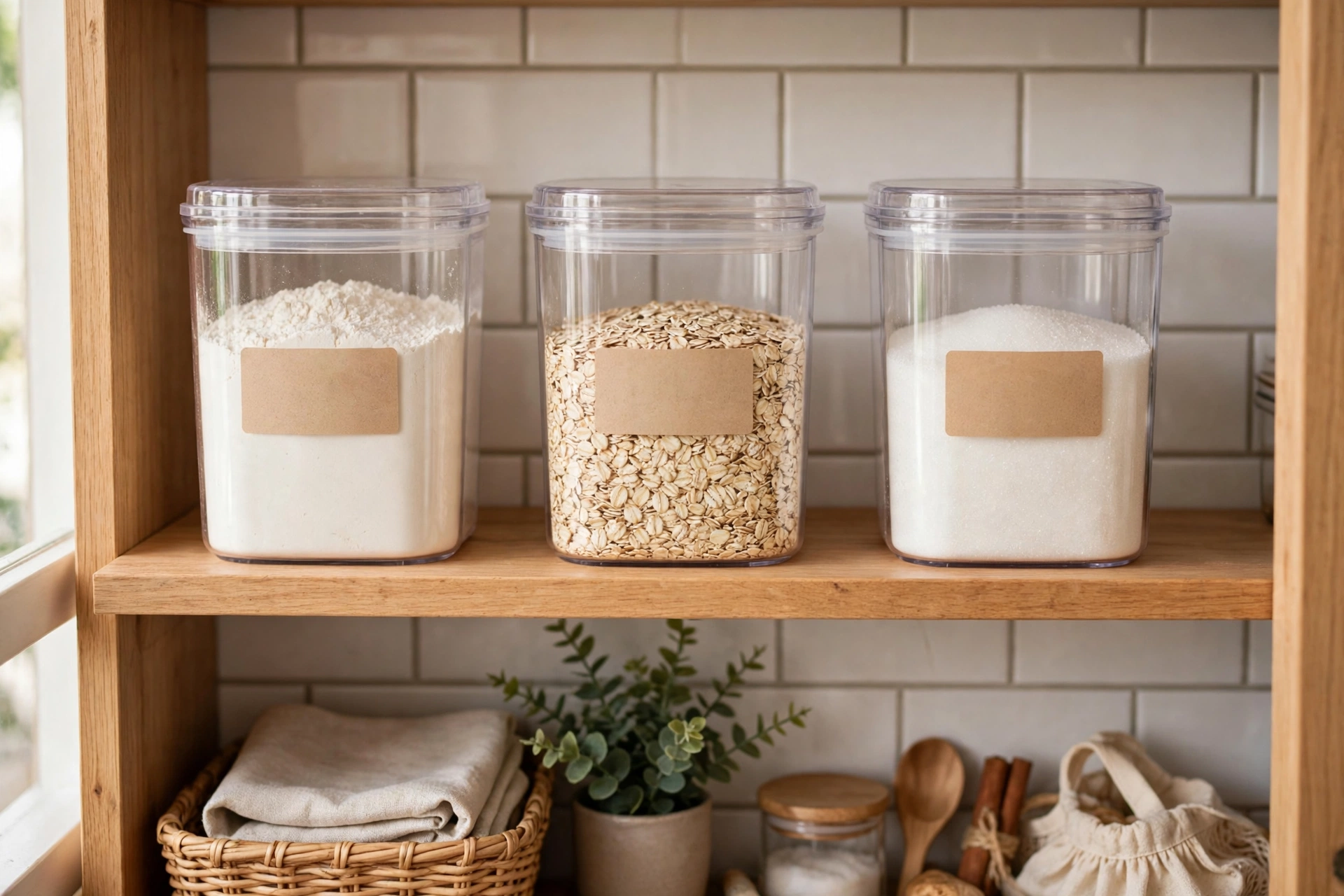
Using clear containers to hold dry goods is the one simple change that makes a small pantry look organized. Flour, sugar, oats, rice, and pasta all stay fresher in sealed containers. You can see how much you have at a glance. Uniform containers make the shelf look neater. You do not need expensive glass. Sturdy plastic containers with tight lids work just as well. They just need to be truly airtight and fit your shelves.
Label every container, even if the contents seem clear. A label that says flour, oats, or rice helps avoid a guessing game when you are baking. It also helps everyone in the house put things back in the right place. Simple labels also help you notice when a container is almost empty before you start a recipe that needs it. If you like a seasonal touch, fall themed removable labels add warmth. They do not require you to change the labels every year.
Use first in first out rotation without thinking about it too much. Put newer items behind older ones. Move older items to the front. This way, the food that is closest to its date gets used first. This one habit reduces waste more than any container. Food stops hiding at the back of a deep shelf. In a deep cabinet, a small basket or bin that slides out makes rotation easier. Pull the bin, take from the front, and push it back.
Use every inch: doors, walls, and vertical space
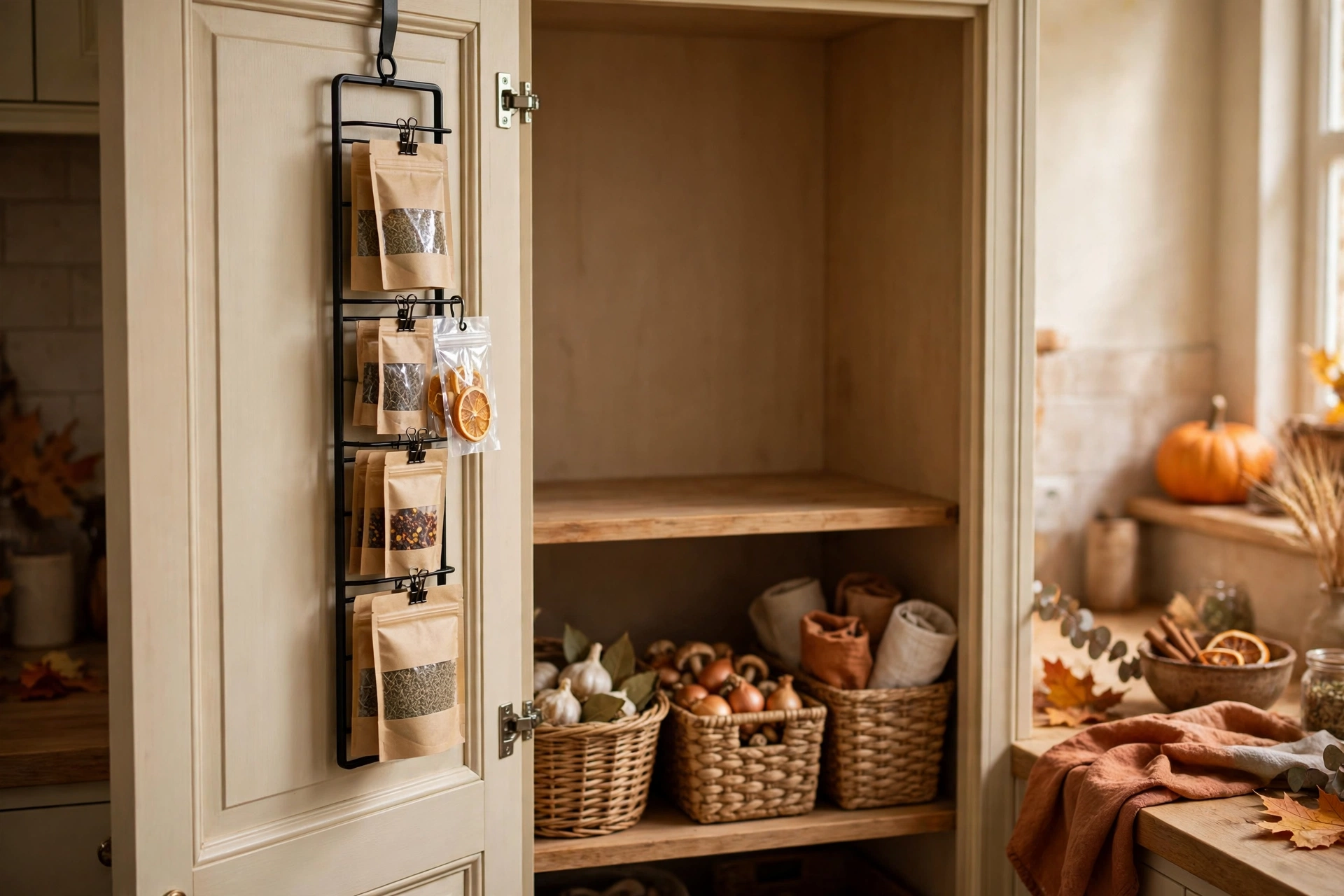
A small pantry has hidden space that is easy to miss. Inside the pantry door, you can place a slim rack for spices, packets, foil, or small snacks. The side walls can hold a narrow shelf or a hanging organizer. The vertical space above short items can hold a shelf riser, a stackable bin, or a second row of small jars. Using these spots does not make the pantry bigger, but it stops the main shelves from doing all the work.
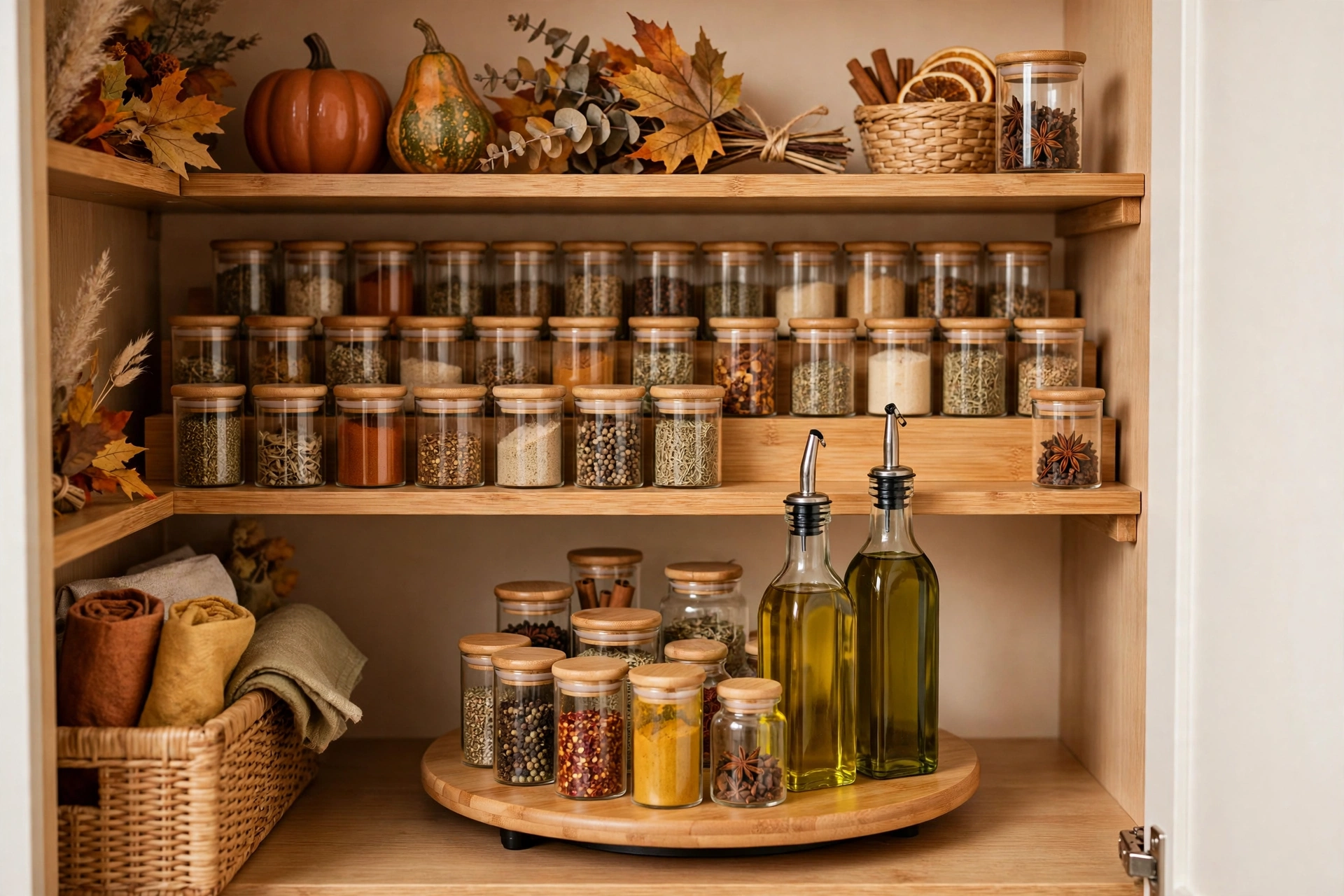
Shelf risers are especially useful in a small pantry, because they turn one deep shelf into two visible rows. Put taller items at the back and shorter items on the riser in front, so nothing hides behind something else. A rotating turntable, often called a lazy Susan, does similar work in a corner or a deep cabinet: spin it to reach oils, spices, or sauces without moving everything in front.
Tension rods are a quiet small pantry trick. When placed vertically, they can divide a shelf into sections for cutting boards or baking sheets. When placed across a cabinet, they can hold spray bottles or cleaning supplies upright. Pull out baskets and sliding bins also help in deep cabinets, because they bring the back of the shelf to you. Choose one or two of these tools that fit your actual pantry shape, rather than buying every organizer you see.
Baskets, zones, and the shopping list habit
Baskets turn loose categories into things you can easily grab. A basket for snacks, a basket for baking supplies, a basket for canned goods, and a basket for breakfast items makes it easy to get what you need. Pick baskets that fit your shelf depth, and add handles if you will move them often. Make sure they are light enough to lift with one hand.
Keep the pantry connected to your shopping list. When a container is almost empty, add it to the list right away. You can use a small chalkboard on the pantry door or a notes app on your phone. This habit stops the two most common small pantry problems. The first is running out of a staple while cooking a recipe. The second is buying things you already have. A quick check of your pantry before a grocery trip helps prevent both. Even just opening the pantry and looking at the shelves for a minute can help.
This way of planning the kitchen works with holiday cooking in a small kitchen. When the pantry is organized, the counters stay cleaner. That is because ingredients have a place to go after you use them. Our Thanksgiving kitchen decor guide for a small kitchen uses the same practical method. It focuses on keeping surfaces clear and letting a few warm details do the work. For the whole-kitchen version of this planning, see our small kitchen organization ideas that actually stick.
The same restraint applies to the rest of the home in the fall. Warm textures and a few seasonal touches make a small home feel cozy. You don’t need to fill every surface. You can read our small space fall decor ideas for the same approach throughout the house.
A fall pantry stock list for a small kitchen
A small pantry does not need to hold everything. It only needs to hold the fall staples that you will actually use, in amounts that fit your shelves. A useful fall base includes flour, sugar, brown sugar, oats, rice, pasta, canned tomatoes, beans, broth, canned pumpkin, baking spices, cinnamon, nutmeg, cloves, dried fruit, nuts, cooking oil, and vinegar. Add hot drink supplies such as tea, cocoa, or coffee, and a few snack staples for busy evenings.
Buy these in sizes that fit your containers, not in bulk sizes that will live on top of the fridge. In a small kitchen, a full container that you can see and reach beats a bulk bag stored somewhere inconvenient. When you find a sale on a staple you use weekly, buy one extra, not five, and store the extra behind the current container so rotation stays simple.
Seasonal produce can join the pantry feeling without taking pantry space. A bowl of apples, squash, or nuts on an open shelf or counter adds fall color and keeps everyday snacks visible. Keep produce that needs refrigeration in the fridge, and keep only sturdy, room temperature items on display. A rustic bowl or a wooden crate on an open shelf gives that autumn market feeling while the pantry itself stays organized behind closed doors.
Keep it organized with a seasonal clean out
A pantry stays organized when it gets a short seasonal clean out, not a yearly overhaul. Set aside twenty minutes at the start of each season, or at least once in fall and once after the holidays. Toss anything expired, combine half empty containers of the same item, and note anything you keep buying but never use. That last note is valuable: it tells you what to stop buying, which frees more space than any new bin.
After the holidays, do a small reset in the opposite direction. Move holiday specific ingredients such as extra baking supplies or specialty items to a single labeled bin or a higher shelf. The pantry then returns to its normal rhythm without a full reorganization, and it will be ready for everyday cooking again.
Teach the system to everyone who uses the kitchen. Labels, zones, and baskets only work if the people who put groceries away know where things belong. A two minute tour when you finish organizing, showing where baking, dinner, breakfast, and snacks live, saves weeks of misplaced items. When a new item arrives, ask where its zone is before it lands on the nearest empty spot.
Frequently asked questions
How do you organize a very small pantry with no walk in space? Empty it, sort by cooking zone, use clear labeled containers, add a door rack and a shelf riser, and keep everyday items at eye level. Pull out baskets help in deep cabinets.
What containers work best in a small pantry? Clear, airtight containers sized to your shelf height, with simple labels. Uniform containers look calmer and stack better than a mix of original bags and boxes.
How often should you clean out a pantry? A quick date check each season, plus a short reset after the holidays, is enough for most small kitchens. A two minute scan before a big grocery shop also helps prevent duplicates.
What fall foods should a small pantry stock first? Flour, oats, canned pumpkin, baking spices, broth, canned tomatoes, beans, rice, and pasta cover most fall meals.
A pantry that makes fall cooking easier
A small pantry does not need to be large to be wonderful. It needs clear containers you can see into, labels you can read at a glance, zones that match how you cook, and a door rack or riser that uses the space you already have. Organize it once this fall, keep the rotation habit, and every soup, bake, and holiday meal that follows will be easier to cook.