Fall Is the Perfect Time to Fix a Small Closet
Fall is the kindest season for a small closet reset, because the change of weather gives you a natural reason to sort. Summer clothes move out, sweaters and coats move in, and for one afternoon you can see everything you actually own. A small closet does not need to hold every season at once. It needs to hold this season well, with room to reach, to choose, and to put things back without a struggle. When fall clothes are easy to find, getting dressed on a cool morning feels calmer, and the whole day starts better.
Most small closet problems are not about size alone. They are about mixing seasons, mixing categories, and storing things where they cannot be seen or reached. A closet that holds summer dresses beside winter coats, shoes under coats, and accessories in a tangled pile will feel crowded no matter how tidy you try to keep it. This guide fixes that with a simple seasonal swap, clear zones, and vertical storage that uses the height of the closet, which is usually the most wasted space in a small home.
You do not need a closet system, new furniture, or a full weekend. You need one afternoon, a few bins and hangers, and a willingness to let go of items that no longer fit, no longer suit you, or have not been worn in a full year. Work in this order: take stock, swap seasons, sort into zones, store vertically, and set a tiny daily habit that keeps the closet tidy. A small closet, organized for fall, can stay that way all season, if the system is simple enough to use when you are tired, in a hurry, or getting dressed in the dark.
1. Start With a Seasonal Swap, Not a Shopping Trip
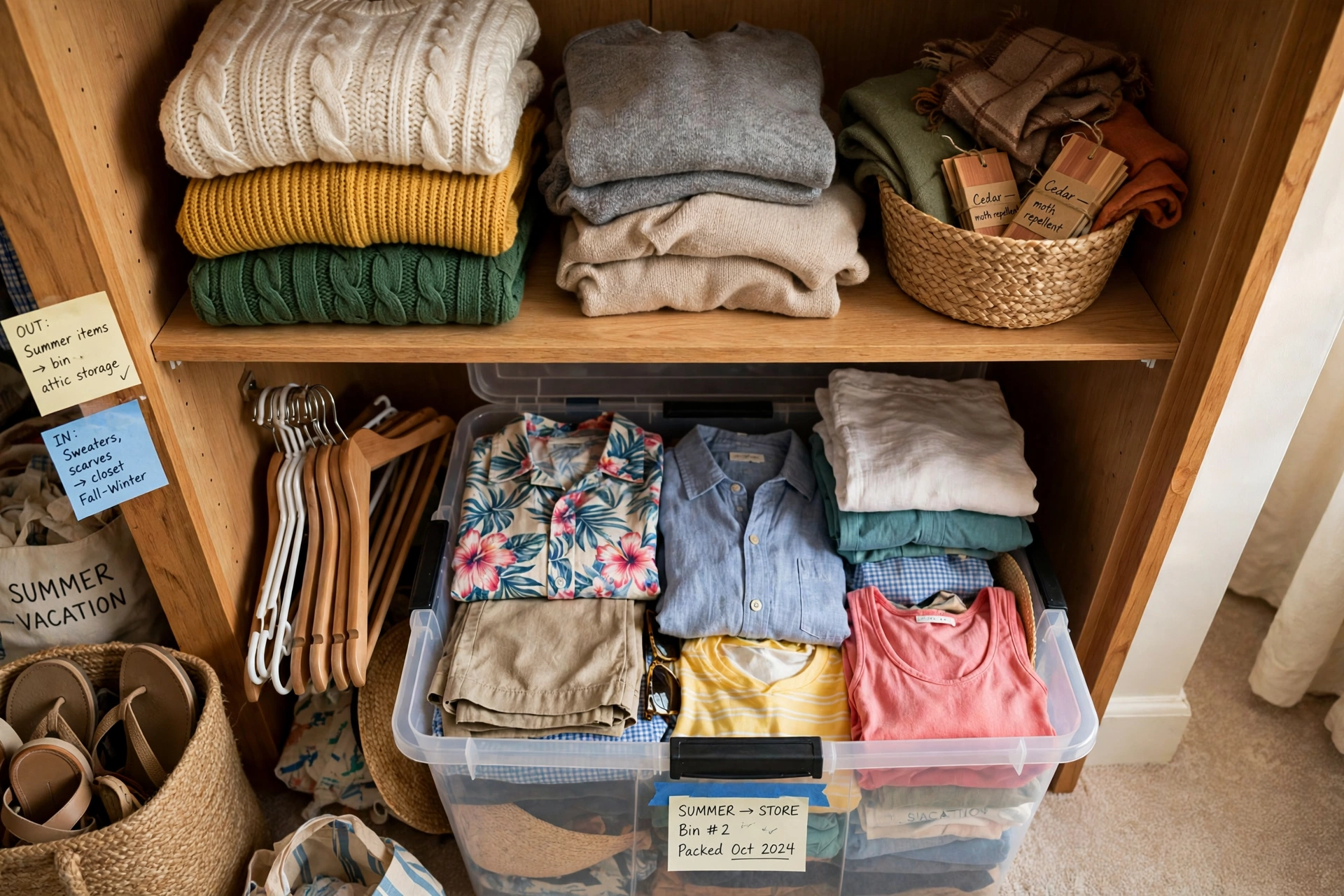
A seasonal swap is the foundation of a small closet that works. Take out summer only items: light dresses, shorts, swimwear, and thin fabrics you will not wear until warm weather returns. Fold them cleanly, place them in a labeled bin, and store that bin on a high shelf, under a bed, or in another out of the way spot. Bring fall items forward: sweaters, long sleeves, coats, scarves, and closed shoes. When only one season lives in the closet, the closet instantly feels larger, even though nothing has changed except what is inside it.
Wash or clean items before you store them, and check for damage as you fold. A stained summer top stored dirty will be harder to clean in spring, while a sweater with a loose button can be fixed in two minutes now. Label the bin clearly with the season and the year, so you can find it without opening three boxes. If you live in a climate with a short in between season, keep one small bin of transition pieces, such as light jackets and long sleeve tops, within easy reach, rather than mixing them through the whole closet.
Be honest during the swap. If an item did not get worn last fall, or it no longer fits comfortably, it is taking space from clothes you do love. Set it aside for donation, repair, or recycling, and do not put it back just because it is familiar. A small closet rewards brave decisions. Every item you release makes room for the clothes you actually reach for on a cool October morning, and it makes the remaining clothes easier to see, which means you will wear more of what you own.
2. Sort Into Zones You Can See at a Glance
Once only fall clothes remain, sort them into zones by how you actually get dressed. A simple set of zones works for most people: everyday tops, bottoms, layers and coats, work or special occasion clothes, and accessories. Hang the clothes you wear most at eye level, in the center of the closet, where you can reach them without stretching or crouching. Hang less worn items, such as formal clothes, to one side, and place everyday items where your hand lands first.
Group by category first, then by color within each category. All sweaters together, all long sleeve tops together, all trousers together, each group arranged from light to dark. This sounds fussy, but it saves time every morning, because you can find a navy sweater without hunting through a mixed rail. It also shows you at a glance when you own three similar items, which helps you avoid buying a fourth. In a small closet, seeing everything clearly is more valuable than owning more.
Use the floor of the closet for shoes only, or for one low bin, not for a pile of everything that did not fit elsewhere. Shoes in a row, or in a low shoe rack, stay visible and easy to pair. A pile of shoes on the floor, on the other hand, hides pairs, collects dust, and makes the closet feel messy even when the rail is tidy. If floor space is very tight, store out of season shoes in the same seasonal bin as summer clothes, and keep only fall shoes in the closet itself.
3. Use Every Inch of Height
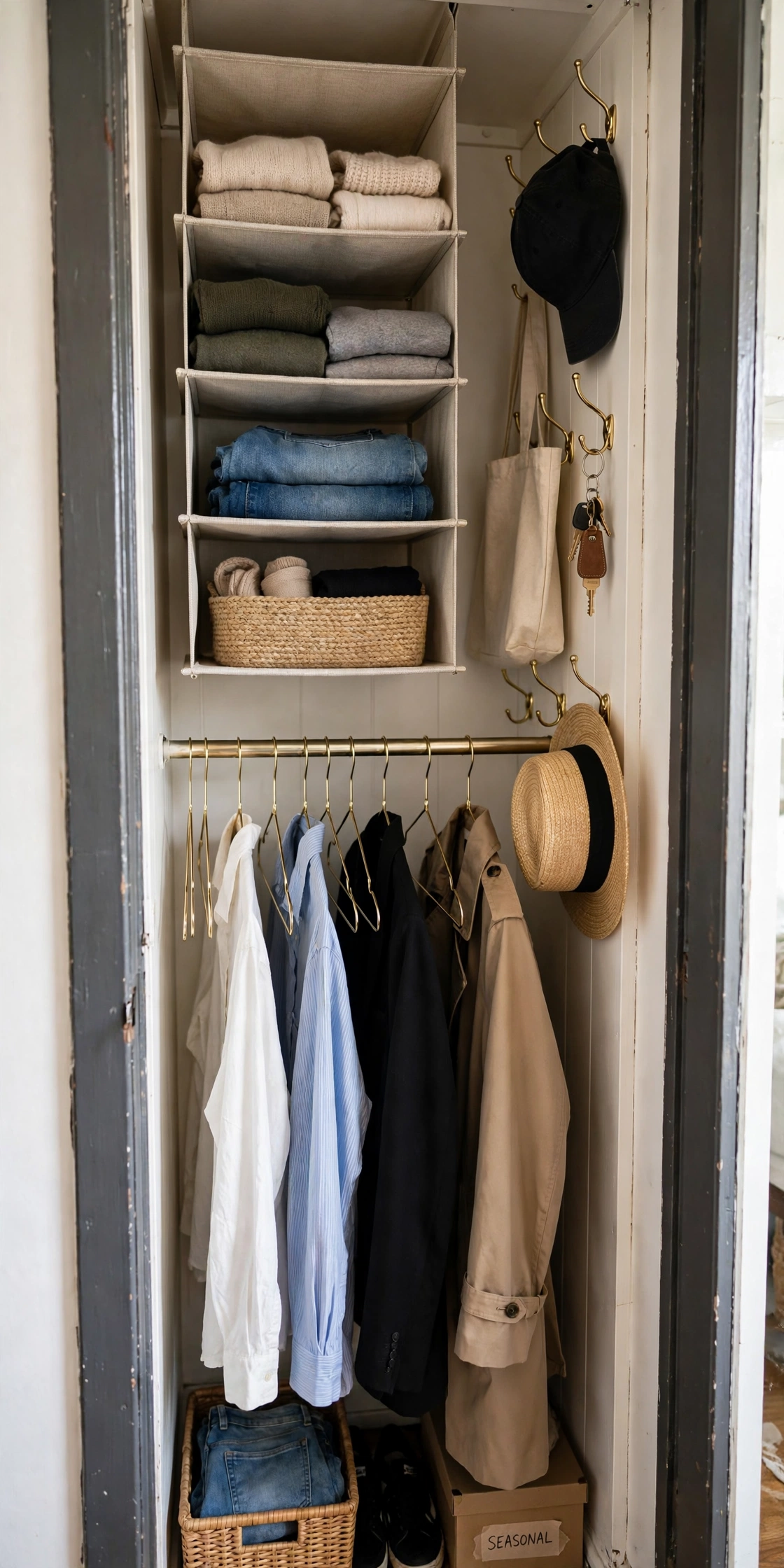
The most wasted space in a small closet is above the rail and below it. A shelf above the rail holds bins for accessories, hats, bags, or out of season items, as long as the bins are labeled and light enough to lift down safely. Hanging shelves that attach to the rail create extra cubbies for folded sweaters, scarves, and bags, without any tools or installation. A second, lower rail, if there is room, doubles hanging space for shorter items such as shirts and folded trousers on clip hangers.
Hooks are the secret weapon of a small closet. Hooks on the inside of the door, on a side wall, or on the end of a rail hold bags, scarves, belts, hats, and tomorrow’s outfit. A hook for a bag means the bag does not live on the floor. A hook for a scarf means scarves do not tangle in a drawer. Choose hooks that are sturdy and easy to use with one hand, because a hook that requires effort will be ignored on a busy morning. Keep hooks for items you use daily, not for storage of things you rarely need.
Be careful not to overload the top shelf or the rail. A closet that is packed to the ceiling looks organized in a photo, but it is hard to use when you need the bin at the back. Leave a little breathing room on every shelf, and keep the items you use weekly within easy reach. Height is useful only when you can actually reach what you store there, safely, without a step stool every day. If you need a step stool, reserve the highest shelf for items you touch once a season, such as the summer bin.
4. Slim Hangers, Matching Bins, and One Visual Calm
Small closets look calmer when hangers match. Slim, non slip hangers take up less rail space than bulky plastic or wooden hangers, and they keep clothes from sliding off. Switching to one type of hanger, even gradually, frees surprising rail space, sometimes enough for several extra items. Hang clothes facing the same direction, with hooks all turned the same way, and the rail will look tidy even when it is full. When you wear an item, turn its hook the other way, and at the end of the season you can see at a glance what you never wore.
Matching bins and baskets do the same work on shelves that matching hangers do on the rail. Choose one or two bin styles in a neutral color, label them clearly, and use them for accessories, small items, and anything that would otherwise become a pile. A bin for scarves, a bin for hats and gloves, and a bin for bags keep small fall items visible and contained. Avoid clear bins that show a jumble inside, unless you enjoy that look, and avoid bins so large that they hide what is at the bottom.
Fold sweaters rather than hanging them, since hanging can stretch knitwear out of shape. Fold them neatly, stack them by weight, and place heavier knits at the bottom of the stack so lighter ones do not get crushed. Roll soft items such as scarves and t-shirts if rolling saves space and keeps them visible in a drawer or bin. The goal is not a perfect display. It is a closet where you can find a sweater, a scarf, and a coat in under a minute, without pulling everything else out first.
5. Create a Small Fall Accessory Zone
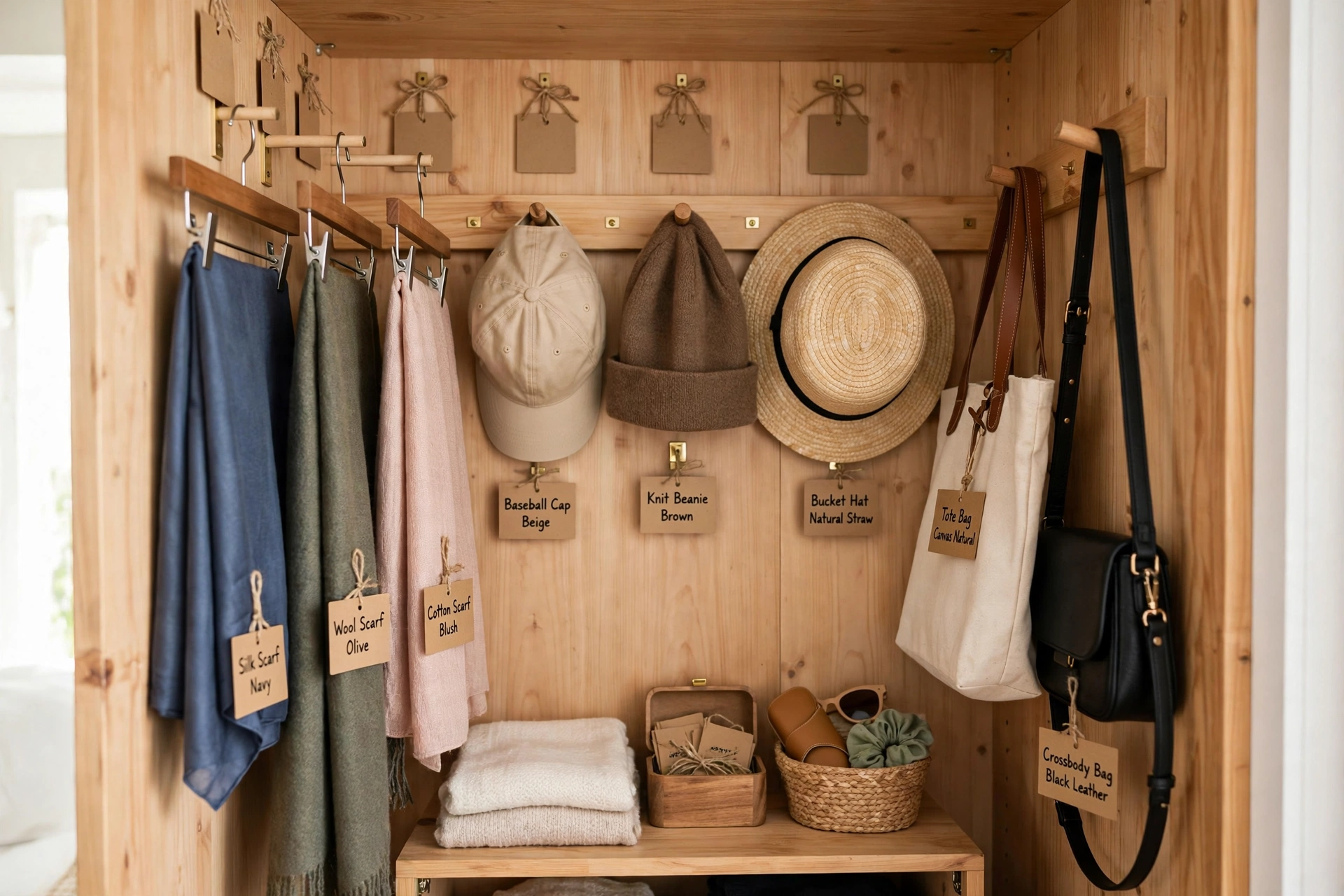
Fall accessories are small, numerous, and easy to lose: scarves, hats, gloves, belts, and bags, each useful, each tangled if stored together. Give them one zone, such as a hanging organizer on the door, a small shelf with labeled bins, or a set of hooks in a row. Hang scarves on rings or hooks so you can see colors at a glance. Place hats and gloves in a bin by the door or on a shelf near coats, so you can grab them on the way out. Keep bags on hooks or on a shelf, stuffed lightly so they hold their shape.
Think about the morning journey, not just the closet. If you grab a scarf, hat, and bag every morning, those items should live near the door or near your coats, not buried behind clothes you rarely wear. A small basket by the entryway can hold the accessories you use daily, while the closet holds the rest. The same small space thinking works at the table, as in our guide to Thanksgiving dining room decor ideas for a small space. When accessories live where you actually need them, they stop migrating to chairs, tables, and the floor.
Rotate accessories with the weather, too. Early fall needs light scarves and a light jacket. Late fall needs warmer hats, gloves, and a heavier coat. Keep the current week’s accessories at the front of the zone, and move heavier items forward as the temperature drops. A small accessory zone that changes with the season feels generous, even in a tiny closet, because it always holds exactly what you need this week, and nothing you do not.
6. Shoes, Bags, and the Floor Problem
Shoes and bags cause more closet floor clutter than any other category, because they are bulky, oddly shaped, and hard to stack. Solve shoes first: keep only fall shoes in the closet, in a row or on a low rack, with pairs together and toes facing out so you can see them. Boots need a little extra care: use boot shapers, rolled magazines, or pool noodles cut to size to keep tall boots upright, so they do not flop over and crush other shoes. Store summer sandals and light shoes in the seasonal bin, out of the way until spring.
Bags deserve the same clarity. Hang bags on hooks, place them on a shelf with dividers, or store smaller bags inside larger ones to save space. Avoid piling bags on the floor, where they lose shape and hide each other. A bag you cannot see is a bag you will not use, and a pile of bags on the floor makes the whole closet feel messy, even if the clothes rail is perfect. Keep daily bags at the front, special occasion bags at the back or on a higher shelf.
Keep the closet floor as clear as possible for everything else. One low bin for laundry, or one shoe rack, is enough. The same clear floor rule helps in a kitchen, as in our guide to Thanksgiving kitchen decor ideas for a small kitchen. If the floor holds more than that, something needs a new home elsewhere in the house. A clear floor makes cleaning easier, makes shoes easier to find, and makes the closet feel larger the moment you open the door. It also prevents the slow creep where the floor becomes storage for everything that did not fit on a shelf.
7. Keep It Tidy With a Two Minute Daily Habit
A closet stays organized when the daily habit is tiny. Try this: when you take off clothes in the evening, hang or fold them immediately, rather than draping them over a chair for later. Put clean laundry away the same day it is folded, and return accessories to their zone when you come home. These two habits, each taking under two minutes, prevent the chair pile that slowly becomes a second closet, and then a mess that needs a full afternoon to fix.
Do a quick weekly check, too. On one set day, spend five minutes returning stray items, refolding one stack that has slipped, and checking for anything that belongs elsewhere in the house. A weekly five minute reset is far easier than a monthly overhaul, and it keeps the closet feeling calm through the whole season. If a zone stops working, change it. A system that is hard to use is not a failure of willpower. It is a sign the system needs a simpler home for that category.
Seasonal transitions are the best time for a slightly longer check. When fall turns to winter, swap heavier coats forward, move lighter jackets back, and review what you actually wore. When winter turns to spring, repeat the swap in reverse. A closet that is reviewed at each season change never gets a chance to become overwhelming, because it is never asked to hold more than one season at a time. Small, regular attention beats a rare, heroic cleanout, every time.
8. What to Let Go, and How to Decide Kindly
Letting go is the hardest part of closet organization, and it deserves a kind, practical approach. Ask three questions about each item: Did I wear it last fall? Does it fit comfortably and suit how I live now? Would I buy it again today? If the answer to two or more is no, the item is a good candidate for donation, repair, or recycling. If you are unsure, put it in a trial box for one month. If you do not reach for it in that month, let it go without guilt.
Handle sentimental items separately, with a clear limit. Keep a small memory box for items with real meaning, rather than keeping a whole rail of clothes you never wear because they remind you of a time or a person. Photograph an item before letting it go, if the memory matters more than the garment itself. A photo takes no closet space, and it preserves the story just as well. Kindness to yourself includes a closet that serves your present life, not only your past.
Donate promptly, so released items do not become a new pile by the door. Bag them, label them, and drop them off within a week, or schedule a collection if that is easier. Repair items worth keeping: a loose button, a small tear, or a worn heel can be fixed quickly and can extend the life of a favorite coat or pair of boots. A closet with fewer, better loved items is easier to organize, easier to dress from, and more enjoyable to open every morning.
9. Fall Closet Ideas for Shared and Tiny Spaces
Shared closets need clear boundaries even more than solo closets do. Divide the rail, the shelves, and the floor space fairly, and label zones if it helps, so each person knows where their items belong. Use different colored hangers or a divider on the rail to mark the boundary, and keep shared items, such as umbrellas or a household bag, in a neutral zone both people can reach. Talk about the system briefly, and adjust it together if one side keeps overflowing. A shared closet works when both people can use it without negotiating every morning.
Very tiny closets, such as a single rail in a studio, need creativity beyond the closet itself. Use a freestanding rail for coats, a shelf above a door for bins, or a wardrobe in another corner for overflow. Keep the closet for daily fall clothes, and store special occasion or bulky items elsewhere, such as under a bed in a flat bin. The closet does not have to hold everything you own. It only has to hold what you need this week, within easy reach.
Renters can use almost all of these ideas without drilling or permanent changes. Hanging shelves, door hooks, tension rods, and freestanding racks all work without tools and leave no marks. Test any adhesive hook in a hidden spot first, and check weight ratings before hanging heavy coats. When you move, the closet should look exactly as it did before, with your system packed into a few bins, ready to set up again in the next home.
Frequently Asked Questions
How do I organize a small closet for fall without buying a closet system?
Start with a seasonal swap, so only fall clothes live in the closet. Sort into zones by category, group by color within each zone, use slim matching hangers, add hanging shelves and door hooks for vertical space, and keep accessories in one labeled zone. Most of the effect comes from sorting and swapping, not from new furniture.
Should I fold or hang sweaters in a small closet?
Fold sweaters, since hanging can stretch knitwear out of shape. Stack them by weight, heavier knits at the bottom, in a hanging shelf or on a shelf where you can see them. Hang shirts, jackets, and trousers, and fold knitwear, scarves, and soft items that would slide off hangers.
How often should I reorganize a small closet?
Do a tiny daily habit of putting clothes away immediately, a five minute weekly reset, and a fuller seasonal swap when the weather changes. A closet reviewed at each season change never becomes overwhelming, because it is never asked to hold more than one season at a time.
Final Thoughts: A Closet That Serves This Season
A small closet organized for fall is not about owning less for its own sake. It is about owning clearly, storing simply, and dressing easily on a cool morning. Swap the seasons, sort into zones, use the height of the closet, give accessories one home, and keep the floor clear. Let go kindly of what you no longer wear, and keep what you love where you can reach it.
Start this afternoon with the seasonal swap alone. Take out summer, bring fall forward, and notice how much larger the closet already feels. Add zones and hooks tomorrow, and a two minute evening habit the day after. By the end of the week, your small closet will feel less like a storage problem and more like a quiet helper, ready for fall, one easy morning at a time.