A Small Laundry Room Can Work Harder Than a Big One
A small laundry room does not need more square footage to work well. It needs a clear path for dirty clothes in, clean clothes out, and a home for every bottle, basket, and stray sock in between. When a laundry room is small, every decision matters more, but that is also why a small room can end up working better than a large one. There is nowhere for clutter to hide, so a simple system shows up immediately, and a tidy system stays tidy with very little effort.
Most laundry frustration does not come from the machines. It comes from sorting on the floor, hunting for detergent, losing socks, and folding on a surface that is already covered. This guide fixes those four problems in order, with ideas that fit a closet laundry, a hallway nook, a bathroom corner, and a tiny dedicated room. You do not need a renovation, new machines, or expensive built ins. You need zones, vertical storage, and a routine that takes minutes rather than a whole weekend.
Start by noticing how laundry actually moves through your home. Dirty clothes come from bedrooms and bathrooms. Clean clothes go back to closets and drawers. Supplies need to live near the machines, but away from heat and damp. Folding needs a flat, clear surface, even if that surface is just the top of a dryer or a pull down shelf. When you design for that journey, rather than for a photo, the room starts to feel easy. A small laundry room, organized around real movement, can make wash day feel almost pleasant.
1. Map the Journey Before You Buy Anything
Before you buy a single basket or shelf, walk the laundry journey in your home. Where do dirty clothes pile up first? Where do you sort? Where do you fold? Where do clean clothes wait before they are put away? In many small homes, the answers are different rooms, which is why laundry feels scattered. The goal is to shorten that journey, even if you cannot move the machines.
Make three simple zones in or near the laundry area: dirty, in progress, and clean. Dirty means a hamper or basket where clothes land without sorting on the floor. In progress means the machines and a small surface for supplies and a stain check. Clean means a basket or shelf where folded clothes wait, clearly separate from dirty laundry. Even in a closet laundry, you can mark these zones with labeled baskets and one shelf, so nobody has to guess where things belong.
Measure the real constraints, too. Note the width between the machines and the wall, the height above the machines, the door swing, and the space needed to open the washer and dryer fully. A shelf that blocks a door, or a basket that blocks a machine door, will be moved out of the way within a week, and the system will fail. Measure first, buy second, and choose storage that fits the space you actually have, not the space in a catalog photo. The same zone idea works in a kitchen, as in our guide to Thanksgiving kitchen decor ideas for a small kitchen.
2. Sorting That Happens Without Thinking
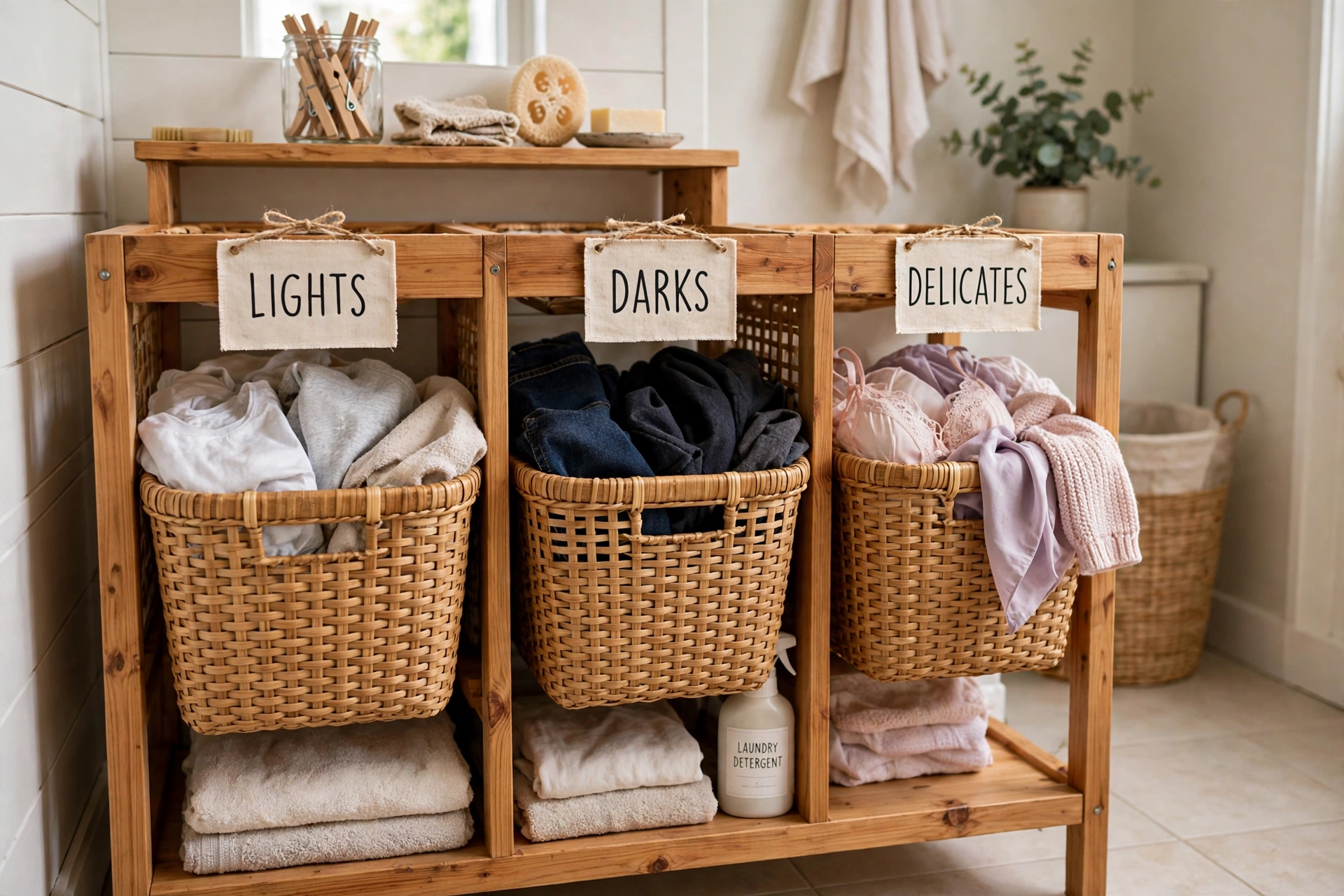
Sorting is where most laundry systems break down, because it usually happens at the worst moment, right when you are ready to start a load and the pile is mixed. The fix is to sort at the hamper, not at the machine. Use two or three labeled baskets or divided hampers, one for lights, one for darks, and one for delicates or towels if your household needs it. When a basket is full, that is your next load, with no extra sorting step.
Label clearly, and keep the labels simple enough for everyone in the home to follow. Words work better than colors alone, especially for children and guests. Lights, Darks, and Delicates is enough for most homes. If you wash towels separately, add a fourth basket, or wash towels with the load that matches their color. Keep a small mesh bag in the delicates basket for socks, small items, and anything with hooks or straps that could snag other clothes.
Place hampers where dirty clothes actually land. A beautiful hamper in the laundry room does not help if clothes pile up in the bedroom. A small hamper in each bedroom, or one divided hamper in a hallway, catches clothes at the source and saves a trip. Empty the hampers into the machine baskets on wash day, and return them the same day, so the system resets itself. Sorting that happens without thinking is sorting that actually happens every week.
3. Go Vertical: Walls, Doors, and the Space Above the Machines
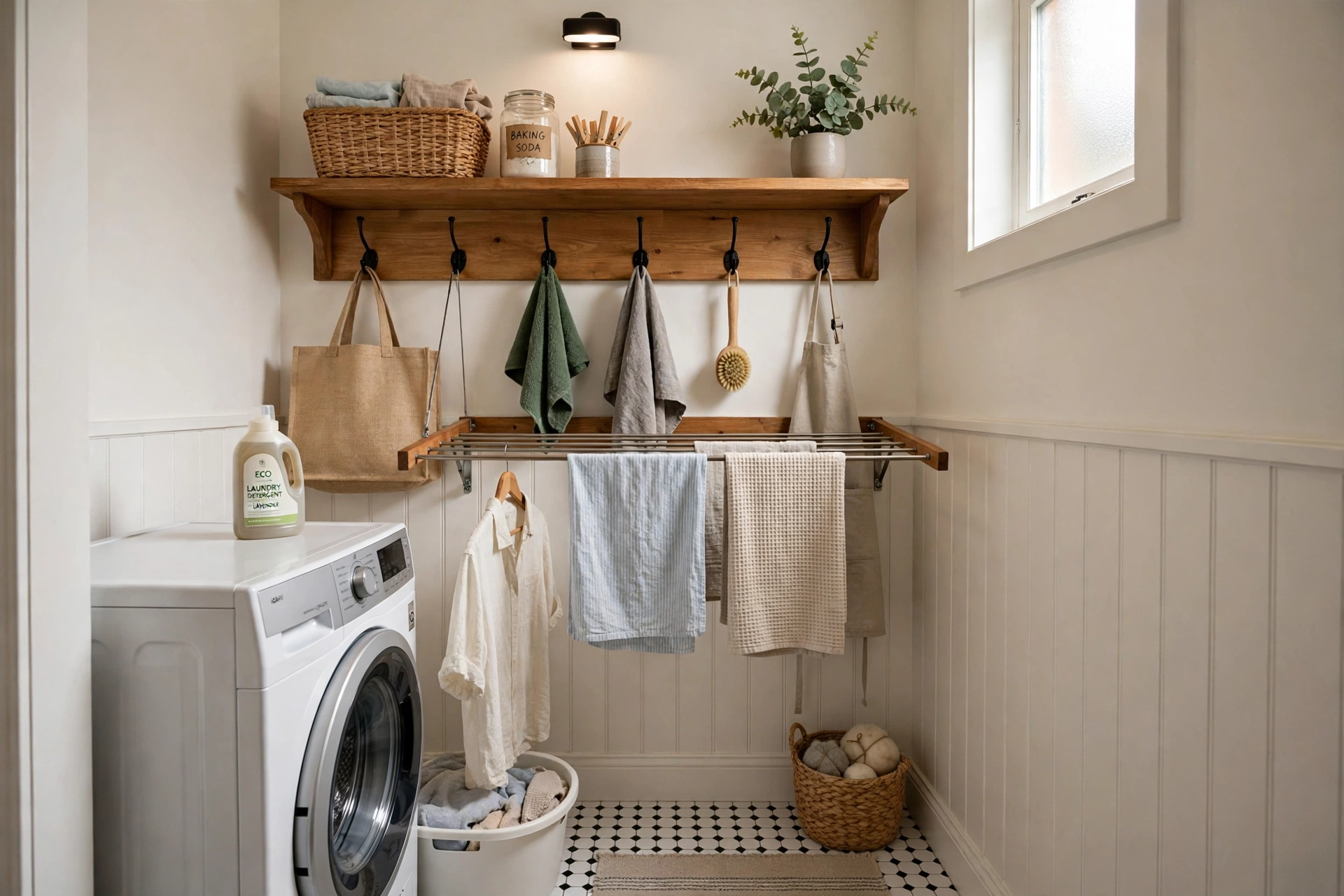
Floor space is precious in a small laundry room, so use the walls. A shelf above the machines holds detergent, stain remover, and a small basket for lost socks, all within reach but off the folding surface. Hooks on the wall or the back of the door hold a drying rack, an ironing board, a dustpan, and bags for delicates. A narrow rolling cart between the machines and the wall holds supplies in a gap that would otherwise collect dust.
Choose wall storage that can handle damp and weight. Metal shelves, sturdy brackets, and hooks rated for the load you plan to hang will last longer than adhesive hooks in a humid room. Keep heavier bottles low and lighter items high, so nothing falls onto the machines. Leave clearance above the machines for ventilation and for opening lids fully. If your machines are stacked, use the side wall and the door for storage instead of the space above.
A pull down shelf, a fold down ironing board, or a shelf that slides over the machines can create a folding surface where none existed. Even a large cutting board laid across the machines, with a non slip mat underneath, gives you a temporary folding counter. The best folding surface is the one you will actually use, not the largest one you can imagine. In a small room, a clear, flat space the size of a laundry basket is enough to fold a full load comfortably.
4. Supplies in One Caddy, Not Scattered Across Shelves
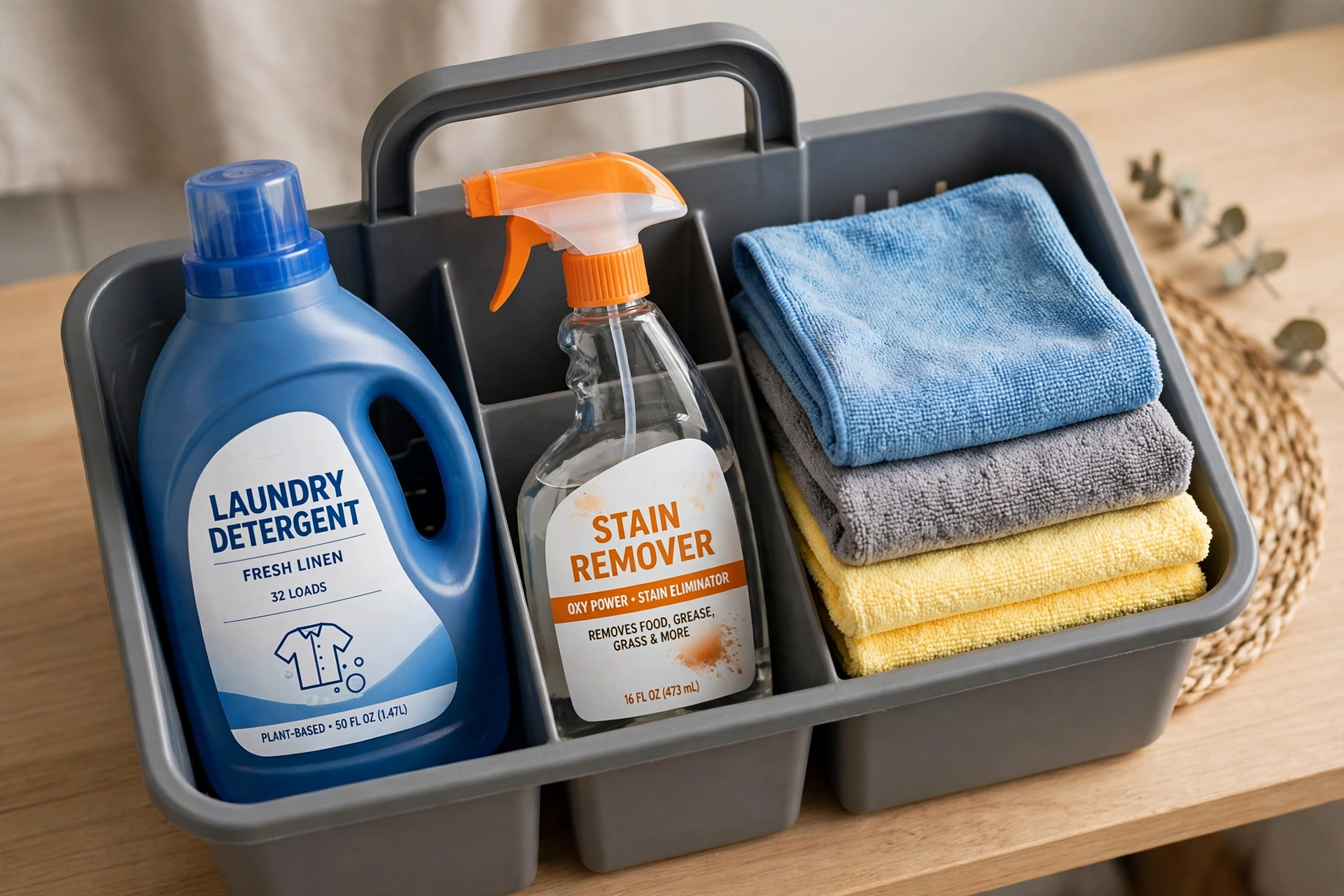
Laundry supplies multiply quickly: detergent, softener, stain remover, dryer sheets, scent boosters, and cleaning cloths, each in a different bottle. The fix is one caddy, carried to the machines when you need it and stored in one place when you do not. A small basket, tote, or bin with a handle holds the essentials, keeps bottles upright, and makes it obvious when something is running low. If you use pods or sheets, a lidded jar or box keeps them dry and away from children and pets.
Decant only if it truly helps. Matching dispensers look tidy, but they add washing, labeling, and refilling work. A simpler approach is to keep products in their original bottles, grouped in one caddy, with labels facing forward. Buy the size that fits your shelf, not the bulk size that has to live on the floor. Keep one backup bottle, not three, and store backups in a separate, labeled spot so the daily caddy stays light.
Keep a small stain kit in the caddy, too: a stain remover pen or spray, a soft cloth, and a small brush. Treating a stain takes a minute when the kit is at hand, and it saves clothes that would otherwise be washed with a stain set in. Wipe the caddy and the shelf once a month, check expiry dates on stain products, and toss anything empty or leaking. A tidy caddy makes the whole room feel tidy, even on a busy wash day.
5. Drying Without Taking Over the House
Drying is the hardest part of a small home laundry system, because wet clothes need air and space, and small homes have little of either. A wall mounted drying rack that folds flat when not in use is often the best solution. It holds a full load, uses wall space instead of floor space, and disappears when the clothes are dry. A retractable clothesline in the laundry area or bathroom works the same way, and it costs very little.
For items that cannot go in the dryer, use a small mesh drying rack on a table or over a bathtub, and rotate items so air reaches all sides. Hang shirts on hangers on a shower rod or a door hook, where they can drip into the tub or onto a towel. Avoid draping wet clothes over furniture, radiators, or wooden surfaces, where they can leave marks or trap damp. In a small home, damp air matters, so open a window or run a fan while clothes dry indoors, and avoid drying a full load in a closed, unventilated room.
Plan drying into your routine, not as an afterthought. Start a load in the morning so it can dry during the day, rather than late at night when it will sit damp until morning. If you use a dryer for most items, save line drying for delicates, wool, and items with prints that could crack in high heat. A small drying system, used consistently, beats a large drying rack that blocks a hallway for two days and gets in everyone’s way.
6. Folding, Putting Away, and the Lost Sock Problem
Folding feels like a chore when there is nowhere to fold and nowhere for folded clothes to go. Solve both problems with one basket and one rule: fold at the machines, and put away the same day. A laundry basket for clean clothes, kept separate from dirty baskets by color or label, carries folded clothes to bedrooms in one trip. Folding at a clear surface near the machines, even if that surface is small, is faster than carrying unfolded clothes to a bed and folding them there.
Use the basket method for socks, too. Keep a small mesh bag or a dedicated sock basket in the laundry area, and put single socks there the moment they appear, rather than hunting for a match across the house. Once a week, spend two minutes matching socks from that basket. Anything still single after a month can be repurposed as a cleaning cloth or recycled, rather than kept in hope forever. A small, honest sock system saves more time than any gadget.
Put away clothes by destination, not by person alone. Fold or hang items in the order of the rooms they belong to, so one trip covers one room completely. For a small table that stays calm when guests visit, see our guide to Thanksgiving dining room decor ideas for a small space. If children put away their own clothes, give them a labeled basket or drawer they can manage without help. A system that depends on one person doing everything will fail on a busy week. A system that everyone can follow, even imperfectly, will keep the laundry room, and the house, noticeably tidier.
7. Small Room Layouts That Actually Work
A closet laundry needs a different layout than a hallway nook, but the principles are the same: keep the path clear, store vertically, and keep supplies in one place. In a closet laundry, use the door for hooks and a hanging organizer, the wall above the machines for one shelf, and a slim cart in any gap. Keep the closet doors open while machines run for ventilation, and close them when the room is tidy, so the laundry area disappears into the hallway.
In a bathroom laundry corner, use waterproof storage and keep supplies away from splashes. A shelf above the toilet or beside the machines, a basket under the sink, and a hook for a drying rack can turn a corner into a working laundry station. In a kitchen laundry nook, keep food and laundry supplies strictly separate, use lidded containers, and wipe surfaces often. A curtain or a folding screen can hide the laundry area when guests visit, without a renovation.
In a tiny dedicated room, resist the urge to fill every wall. Leave one wall mostly clear for folding and movement, and concentrate storage on the other walls. A room that looks empty in a photo is often the room that works best in real life, because there is room to move, to sort, and to fold without bumping into storage. Leave space for the person doing the laundry, not just for the things they store.
8. A Weekly Routine That Takes Minutes, Not a Weekend
A small laundry room stays organized when the routine is small, too. Try a simple weekly rhythm: one or two loads on set days, rather than a mountain of laundry on Sunday. Sort at the hamper daily, treat stains when they happen, and fold at the machines on wash day. Spend five minutes at the end of wash day returning baskets, wiping the machines, and checking supplies. That five minute reset is what keeps the room from sliding back into clutter.
Do a slightly longer check once a month: clean the lint filter and the detergent drawer, wipe shelves and the caddy, check hoses and connections for leaks, and toss empty bottles and single socks that have waited too long. Clean the washer according to its manual, and leave the door ajar after a wash so the drum dries and stays fresh. These small habits prevent the damp smell and the sticky residue that make a laundry room feel unpleasant, even when it looks tidy.
Involve the household in the simplest version of the system. One person can own sorting, another can own folding, or everyone can own their own hamper and their own put away step. Write the routine on a small card inside a cupboard door if it helps, with just three lines: sort at the hamper, fold at the machines, put away the same day. A routine that fits on a card is a routine people will actually follow, week after week, in a small home.
9. Keep It Safe, Dry, and Easy to Clean
Laundry rooms combine water, heat, electricity, and chemicals, so safety deserves a moment of attention. Keep detergent and stain products out of reach of children and pets, preferably in a high shelf or a lidded caddy. Never mix cleaning products, and follow the labels on both the products and your clothes. Keep the area around the machines dry, wipe up spills promptly, and check hoses regularly for cracks or bulges, especially in older homes.
Ventilation matters in a small laundry space. Leave room for air around the machines, avoid blocking vents, and open a door or window while drying indoors. If the room smells damp, check for a leak, a blocked filter, or clothes left too long in the washer. A small dehumidifier or a fan can help in a windowless room, but fixing the source of damp matters more than covering it. A dry laundry room is a room that stays fresh and protects both clothes and machines.
Choose surfaces that are easy to clean. A wipeable shelf, a washable basket liner, and a smooth folding surface save time every week. Avoid fabric storage that absorbs damp in a laundry area, unless it can be washed easily. When cleaning is quick, it happens. When cleaning is a project, it waits, and a small room shows that wait immediately. Simple, wipeable, and within reach is the right standard for every laundry storage choice.
Frequently Asked Questions
How do I organize a very small laundry room with no storage?
Use the walls and the door: one shelf above the machines, hooks on the door, and a slim cart in any gap. Keep supplies in one caddy, sort at the hamper with labeled baskets, and use a wall mounted drying rack that folds flat. Leave one surface clear for folding, even if it is just the top of a dryer with a non slip mat.
What is the best way to sort laundry in a small home?
Sort at the hamper, not at the machine, with two or three labeled baskets for lights, darks, and delicates. Place hampers where dirty clothes actually land, such as bedrooms or a hallway, and use a mesh bag for socks and small items. When a basket is full, that is your next load, with no extra sorting step.
How can I stop losing socks in a small laundry room?
Put single socks in a small dedicated basket or mesh bag the moment they appear, and spend two minutes once a week matching them. Wash socks in a mesh bag so pairs stay together through the wash, and retire single socks after a month rather than keeping them in hope forever.
Final Thoughts: A System You Can Keep
A small laundry room does not need to be perfect. It needs to be clear enough that dirty clothes have a home, supplies have a caddy, clean clothes have a basket, and folding has a surface. Start with sorting at the hamper, add one shelf and one caddy, and choose a drying rack that folds away. Put away the same day, reset for five minutes on wash day, and let the system grow slowly, one useful item at a time.
Your laundry room will not get bigger, but it can get easier. A room where every load has a path, every bottle has a place, and every sock has at least a chance of finding its partner is a room that quietly makes the whole house feel more organized. Start with the hampers tonight, and let the rest follow, one small, practical step at a time.