
Every fall, the entryway quietly becomes the busiest room in a small home. Coats get heavier, shoes get wetter, bags get fuller, and scarves, umbrellas, and school things start piling up by the door. Without a plan, that pile grows a little every day until the first thing you see when you walk in is clutter. With a plan, the same small space can feel calm, welcoming, and ready for the season. This guide shares fall entryway organization ideas that work in small homes: narrow hallways, tiny foyers, and even just a stretch of wall beside the front door.
The secret is to organize by how you arrive home, not by how a catalog looks. You walk in, you need somewhere for shoes, somewhere to hang a coat, somewhere to drop keys and mail, and a clear path into the rest of the house. When each of those needs has one obvious home, tidiness stops being a daily battle and starts being a habit.
Start with three small zones
Think of your entryway as three zones side by side. The wet zone sits closest to the door and handles everything damp: wet shoes, umbrellas, and muddy boots. The transition zone sits inside where you pause to take shoes off or set a bag down. The launch zone sits furthest from the door and holds the tidy, dry things you grab on your way out: keys, wallet, mail, and sunglasses.
You do not need a foyer to use this idea. In a hallway, the wet zone can be a boot tray, the transition zone can be one bench or a low stool, and the launch zone can be one small tray on a console or a wall pocket. The zones can overlap in a small space, but keeping the idea in mind stops wet things from migrating onto dry surfaces and stops keys from disappearing into a pile of coats.
Walk the path yourself. Notice where things land. If shoes always end up to the left of the door, put the boot tray there instead of fighting the habit. If mail always lands on the nearest flat surface, put a small tray or wall pocket on that surface on purpose. Organization works best when it follows the life already happening in the room, rather than asking everyone to change their route.
Handle wet shoes before they spread
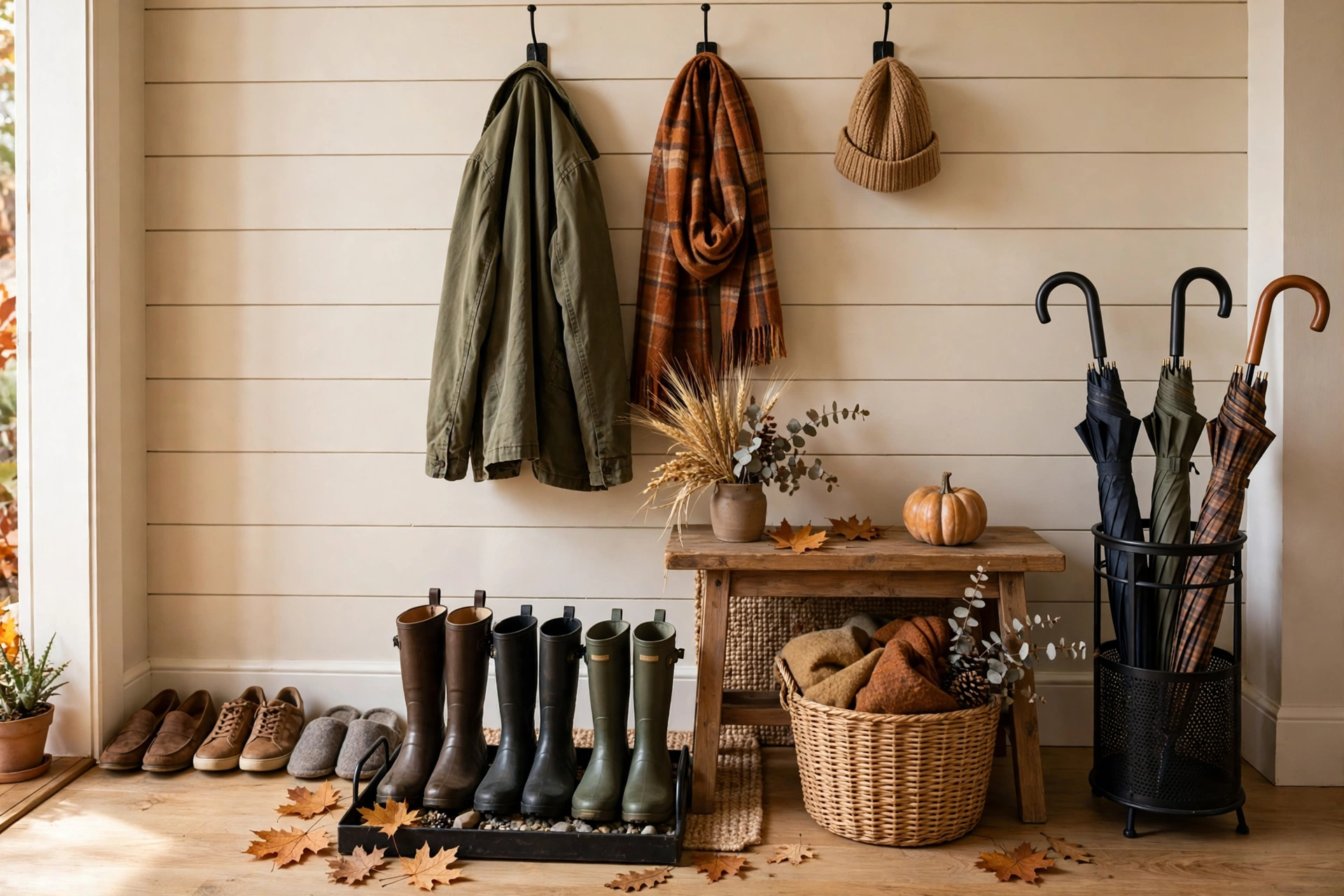
Fall weather is the biggest test for the entryway. Rain, leaves, and mud come onto every pair of shoes. A small house feels the mess faster than a large house. A boot tray or a washable mat inside the door catches most of the dirt. Pick a tray with a raised edge so water stays inside, and choose one that you can rinse in a sink or wipe clean in a minute. A pretty tray that is hard to clean will soon be ignored. The mess will spread again.
Put a rule with the tray: shoes off at the door, or at least wet shoes on the tray. A low bench or a sturdy stool next to the tray makes it easy, because people can sit for a moment instead of balancing on one foot in a narrow hall. Under the bench, a low shelf or a pair of baskets keeps shoes tidy without a shoe cabinet. Keep the shoes you wear this week by the door. Out-of-season shoes belong in a closet or a labeled box elsewhere, not in the entryway fighting for space.
A small broom or a dustpan kept close is a hero. A quick sweep of leaves and grit takes less than a minute. It stops the hallway from feeling dusty. Keep a couple of towels in a basket near the door to wipe paws, wet bags, or muddy boots, and keep them ready for muddy days. Small habits like these do more than any piece of furniture.
Use the walls, because the floor is full
In a small entryway, the floor is almost always the scarcest resource. Walls, on the other hand, are often empty. A row of hooks at two heights turns a blank wall into coat, bag, and scarf storage without using floor space. Put adult hooks at a comfortable height, and a lower row for children, so everyone can hang their own coats.
A slim wall shelf above the hooks holds extras: a candle, a tiny vase of dried stems, or a small dish. Keep the shelf shallow so it does not become a bump hazard in a narrow hall.
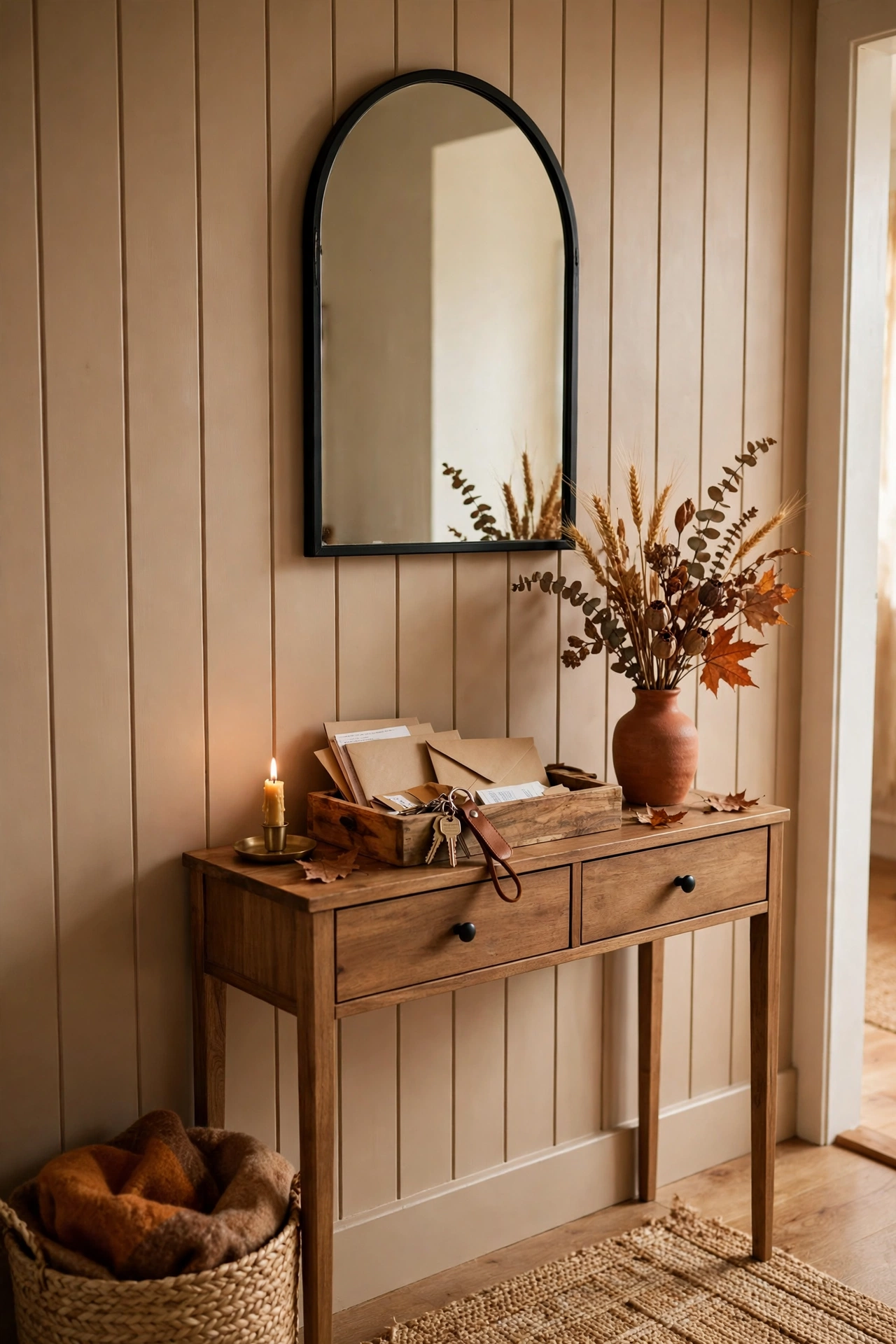
A mirror above a console does double work: it makes the space feel larger and brighter, and it gives you a last look before you leave. If you cannot hang a mirror, leaning a small one on a console works just as well in a rental.
Floating hooks and rails are renter friendly when you choose adhesive or tension options rated for the weight you plan to hang. Test one hook with a heavy coat before loading a whole row, and keep heavier bags on a lower, sturdier hook. The goal is storage that stays up and stays useful, not a row of hooks that slowly peels away from the wall.
Baskets, labels, and the one basket rule
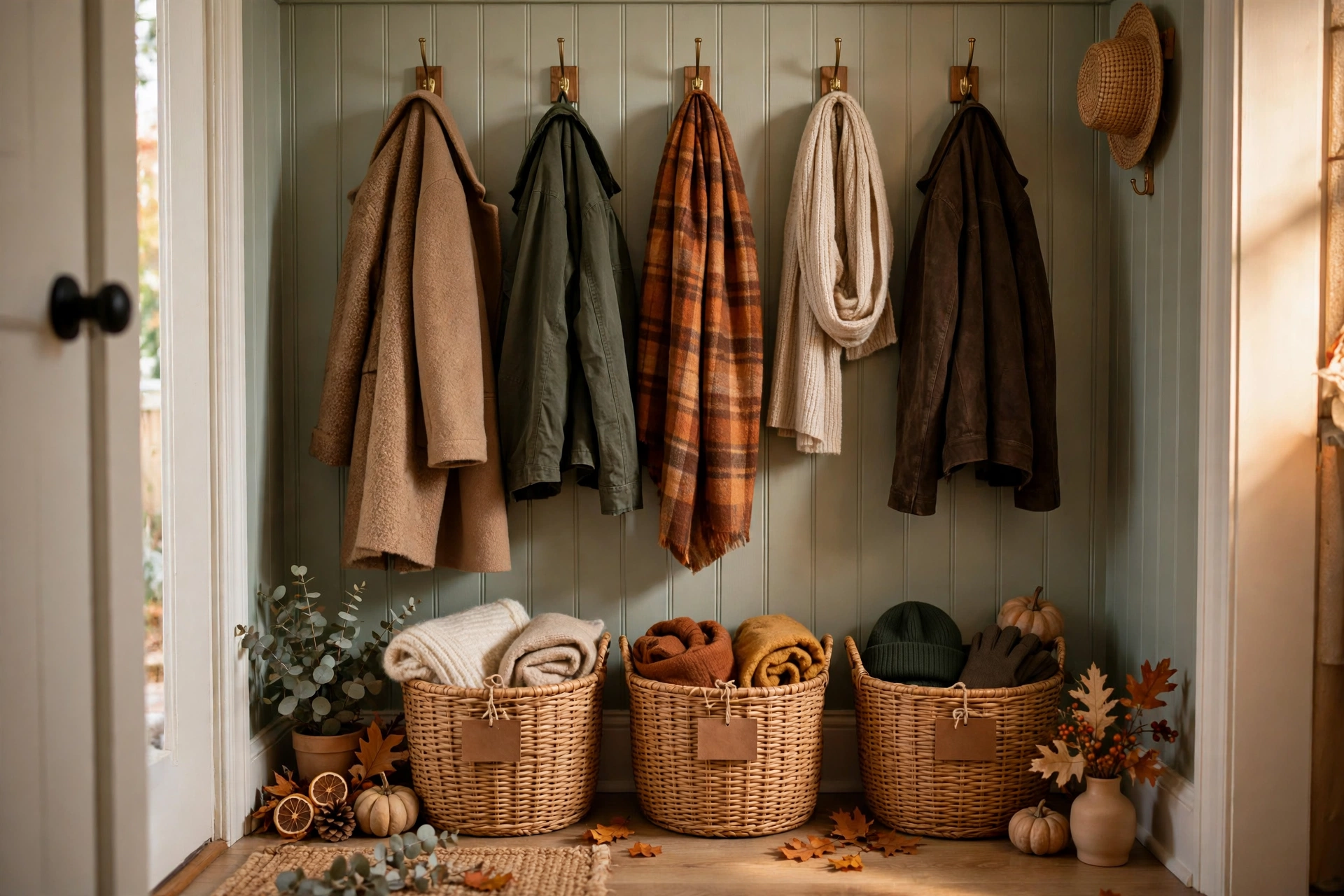
Baskets are the small entryway’s best friend, because they hide clutter while adding warmth. One basket for each person for hats, gloves, and scarves works well for families: each person knows where their things belong. If one basket for each person feels like too many, use one basket for each category instead: all hats in one basket, all gloves in another, and all scarves in a third.
Labels make baskets work for everyone, not just the person who set them up. A simple tag, a chalk label, or a piece of tape with a name or category turns a basket from a mystery into a clear home. Children, guests, and partners can all put things away correctly when the label tells them where things belong. Keep labels short and honest: hats, gloves, dog things, or school things are clearer than a clever phrase no one understands.
Follow the one basket rule for small extras: if a small item has no basket, tray, or hook, it will end up on the floor or on a counter. Keys, coins, sunglasses, and dog leashes all need one small home. A shallow tray on a console, a small wall pocket, or a single lidded basket near the door handles all of them. Empty that tray once a week. A two minute weekly reset stops a tidy tray from slowly turning into a junk drawer by the door.
Add one fall accent, not a fall display
An organized entryway can still feel like fall, and it should. The trick in a small space is to choose one seasonal accent and let it shine, instead of building a full display. One small pumpkin on a console, one wreath on the door, one vase of dried stems, or one warm toned runner is enough.
This restraint also makes seasonal change easy. When one accent is the only seasonal piece, swapping it later takes a minute, and the organized base stays the same. That base, hooks, baskets, a tray, and a bench, is what keeps the entryway calm through every season. The accent is just the seasonal outfit it wears for a few weeks. When that outfit changes for the holidays, see our Christmas entryway decor ideas for a small space.
If you love fall color throughout the house, carry the same warm tones from the entryway into the next room. Our small space fall decor ideas share the same approach: a few warm textures, used with restraint, can change a whole room. Similarly, the way a mantel anchors a living room can inspire how you anchor an entryway: choose one focal point, and let the rest stay simple. Our cozy Thanksgiving mantel guide shows that balance in action, and the same principle works beside the front door.
The seasonal swap: what to move in and out
Early fall feels like the right moment for a seasonal swap, because summer stuff still hangs near the door. Pack away thin jackets, swim bags, sandals, and beach totes to a closet, a high shelf, or a labeled box. Bring forward the things fall actually needs: a heavier coat per person, one warm scarf each, gloves, and related fall items. Do this swap in one short session, not as a vague weekend project. Set a timer for thirty minutes, empty the entryway completely, wipe the surfaces, and put back only what is used. Anything that has sat untouched by the door for months probably belongs somewhere else. Donating or relocating those extras is what creates the breathing room a small entryway needs.
Keep a small donation basket in a closet for the swap. When you find a coat no one wears, a bag no one carries, or a pair of shoes no one reaches for, it goes in the basket. When the basket is full, it leaves the house. This habit keeps the entryway from slowly refilling between seasons.
A weekly reset that actually sticks
Organization fails when it depends on a big clean every month. It succeeds when it depends on a tiny reset every week. Pick one day, perhaps Sunday evening, for a five minute entryway reset: shoes back on the tray or shelf, coats on hooks, and small things back in their tray or basket. Involve everyone who uses the space, even if their part is just putting their own shoes away. Keep the reset visible and simple. A small checklist on the inside of a closet door, or just a habit of doing it while dinner cooks, is enough.
Do not add a complicated system on top of the reset. The system is already in place: zones, hooks, baskets, and one tray. The reset simply returns things to the homes you already made for them. If the entryway still feels chaotic after a reset, it usually means something stored there does not belong there. Ask one question about each item: did anyone use this in the past week? If not, move it to its real home elsewhere. Small spaces stay calm by holding only what is used often, and that question is the kindest way to decide what stays.
Frequently asked questions
How do you organize a very small entryway with no closet? Use the walls for hooks and a slim shelf, a boot tray for wet shoes, a bench or stool for sitting, and baskets for small things. Keep only this season’s items by the door and store the rest elsewhere.
What is the best way to keep a fall entryway tidy with kids? Give each child one basket and one hook at their height, label both, and keep a boot tray they can reach. A short daily habit of shoes on the tray and coats on hooks works better than a weekly lecture.
How much fall decor should a small entryway have? One accent is plenty: a wreath, a small pumpkin arrangement, a vase of stems, or a warm runner. Let the organized base do the work and let the accent add the seasonal feeling.
When should you do the fall entryway swap? Early in the season, when heavier coats and wet weather arrive. A thirty minute session to move summer things out and fall things in sets the entryway up for months.
A calm arrival, every day
A small entryway does not need more space to feel organized. It needs a home for wet shoes, a hook for every coat, a basket for small things, a tray for keys and mail, and a clear path. Build those pieces once, reset them for five minutes a week, and swap them with the seasons, and arrivals stay calm every day.
Pingback: Small Space Fall Decor Ideas for a Cozy Home
Pingback: Christmas Entryway Decor Ideas for a Small Space